2026 Best 430 Stainless Steel Strip Types for Global Buyers?
Global buyers entering 2026 need more than a low price when selecting 430 Stainless Steel Strip. Width, thickness, temper, surface finish, edge condition, and coil consistency can change real purchasing value. A bright 2B strip may suit appliance panels, while a brushed finish may better fit architectural trim. Small differences matter.
The International Stainless Steel Forum reported approximately 62 million tonnes of global stainless crude steel production in 2024. Its data confirms a large, competitive supply base, but it does not guarantee uniform strip quality. World Steel Association outlooks also point to uneven industrial recovery across major regions. Buyers should therefore examine supplier capacity, inspection records, and technical documentation. A polished catalogue is not enough.
Harold M. Cobb, a recognized stainless-steel historian and materials specialist, wrote, “Stainless steel is not a single material; it is a family of alloys.” That principle remains practical for 430 Stainless Steel Strip. Its ferritic structure offers useful oxidation resistance, magnetic response, and cost advantages because it normally contains little or no nickel. Yet 430 is not a universal replacement for 304. Forming demands, weld design, chloride exposure, and surface expectations can expose its limits. Grand View Research and other market studies describe continuing demand from automotive, appliance, and industrial applications, but market growth does not remove engineering judgment. This guide compares the best 2026 strip types by performance, finish, supply reliability, and application fit. Some recommendations will remain imperfect. Real production conditions are rarely as clean as a spreadsheet.
430 Stainless Steel Strip: Definition, Composition, and Key Characteristics
430 Stainless Steel Strip: Definition, Composition, and Key Characteristics
430 stainless steel strip is a ferritic, chromium-based alloy used in appliances, decorative panels, automotive trim, and light industrial parts. ASTM A240/A240M specifies about 16–18% chromium and a maximum carbon content near 0.12%. Iron forms the balance. This chemistry supports magnetic behavior, moderate corrosion resistance, and practical cost control. It does not provide the nickel-rich toughness of many austenitic grades.
The strip is commonly supplied in cold-rolled finishes, including bright and brushed surfaces. Its chromium content helps resist staining in dry indoor environments. However, salt, moisture, and acidic cleaners can cause surface marks. ISSF statistics reported global stainless steel production of approximately 58.4 million metric tonnes in 2023. That figure reflects strong worldwide demand, but it does not make every 430 strip suitable for outdoor service. Selection still depends on thickness, temper, surface finish, and forming requirements.
Check the mill certificate before purchasing. Confirm chromium, carbon, thickness tolerance, hardness, and surface condition. A practical trial bend can reveal edge cracking or excessive springback. Avoid assuming a mirror finish proves better corrosion resistance. That assumption is imperfect. For deeper drawing, 430 may need careful tooling and controlled forming. Buyers should also compare ASTM requirements with the destination market’s specifications, since “430” can describe different delivery conditions. Small chemistry differences may change polishing results, weld response, and long-term appearance.
Main Types of 430 Stainless Steel Strip for Industrial Applications
Main Types of 430 Stainless Steel Strip for Industrial Applications
430 stainless steel strip is a ferritic grade with magnetic properties and moderate corrosion resistance. Its main advantage is predictable performance in dry or mildly corrosive environments. Industrial buyers commonly select cold-rolled 2B strip for appliance panels, indoor equipment, and formed components. The smooth surface supports cleaning and light polishing.
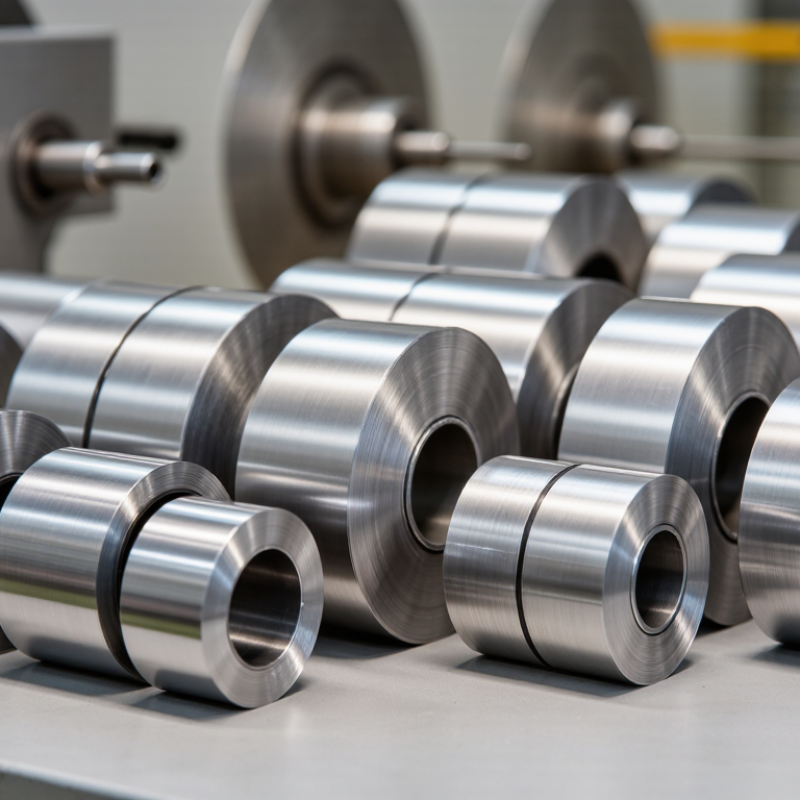
Bright-annealed strip offers a more reflective finish. It suits decorative trim, kitchen equipment, and visible automotive components where appearance matters. Brushed or No. 4 strip creates a directional satin texture. It can hide small handling marks better than a mirror-like surface. Slit-edge strip is useful for narrow profiles, clips, and stamped parts. Mill-edge strip may reduce processing steps, but its edge condition needs closer inspection.
Thickness, width, temper, and flatness affect production results. A buyer should check coil weight, inner diameter, burr limits, and surface protection before ordering. 430 strip is workable, but it is less formable than many austenitic grades. Deep drawing can expose cracking risks, especially around tight corners. Welding also requires controlled procedures and suitable design details. This grade is not an ideal choice for continuous salt spray or severe chemical exposure. In practice, a small trial run often reveals problems that certificates cannot show. That trial is worth the time.
Surface Finishes, Dimensions, and Performance Specifications
2026 Best 430 Stainless Steel Strip Types for Global Buyers?
Surface finishes, dimensions, and performance specifications determine whether 430 stainless steel strip performs reliably. ASTM A240 lists Type 430 with 16.0–18.0% chromium. Its minimum tensile strength is 450 MPa, with a 205 MPa minimum yield strength and 22% elongation. The International Stainless Steel Forum reported approximately 58.4 million tonnes of global stainless steel production in 2023. That scale increases the need for clear, verifiable strip specifications.
Finish selection should match the working environment. A 2B surface is smooth and practical for formed parts. BA offers a brighter appearance, while No.4 provides a directional brushed texture. No.8 can look mirror-like, but visual brightness does not always prove low surface roughness. Buyers should request measured Ra values, not only finish names. ASTM A480 also defines finish and dimensional requirements, although actual mill practices can still vary.
Thickness, width, coil weight, and edge condition need separate confirmation. ISO 9445 provides guidance for cold-rolled stainless steel strip dimensions and tolerances. A purchase order should state thickness tolerance, width tolerance, slit-edge quality, and coil inner diameter. Small errors matter.
Type 430 is magnetic and offers useful oxidation resistance in indoor and mildly corrosive service. It is less suitable for chloride-rich or continuously wet environments. ASTM data is valuable, but a certificate alone may not reveal flatness or burrs. In practice, I would inspect sample coils before approving a large shipment. Surface appearance can mislead. Tensile strength can also vary after forming, so application trials remain worthwhile.
2026 Best 430 Stainless Steel Strip Types for Global Buyers
Surface finishes, dimensions, and representative mechanical performance specifications
The chart compares common 430 stainless steel strip tempers using representative midpoint values for tensile strength and elongation. Annealed strip provides the highest formability, while cold-worked half-hard and full-hard strip offers higher strength. Typical finishes include 2D, 2B, BA, No. 4, and No. 8. Common supply dimensions are approximately 0.05–3.00 mm in thickness and 5–600 mm in slit width, subject to the applicable ASTM, EN, or JIS specification.
| Temper | Typical Finish Options | Common Thickness | Common Slit Width | Typical Application |
| Annealed | 2D, 2B, BA | 0.05–3.00 mm | 5–600 mm | Deep drawing, forming, appliance parts |
| Half-hard | 2B, BA, No. 4 | 0.10–2.00 mm | 5–600 mm | General fabrication, trim, brackets |
| Full-hard | 2B, BA, No. 4, No. 8 | 0.05–1.50 mm | 5–600 mm | Wear-resistant components, clips, precision parts |
How Global Buyers Can Select the Right 430 Stainless Steel Strip
How Global Buyers Can Select the Right 430 Stainless Steel Strip
Choosing 430 stainless steel strip starts with the service environment, not the lowest quotation. The grade usually contains about 16–18% chromium and offers magnetic behavior, moderate corrosion resistance, and good thermal performance. ASTM A240 provides the relevant chemical and mechanical requirements for flat-rolled stainless products. Buyers should verify the mill certificate, thickness tolerance, hardness, and surface finish before approving samples.
Demand also matters. The International Stainless Steel Forum reported approximately 58.4 million tonnes of global stainless steel production in 2023. This scale supports broad supply, but it does not guarantee consistent strip quality. For appliance panels, automotive trim, and heat shields, a 2B finish may be practical. Brushed or polished surfaces require tighter control of scratches, reflectivity, and protective film adhesion. Check both sides under strong angled light.
Small details can decide performance.
Specify thickness, slit width, edge condition, coil weight, and allowable camber. A narrow strip with rough edges can damage forming tools or create handling risks. For bending, request hardness data and run a small trial, especially when the design includes tight radii. 430 stainless steel is not a universal substitute for austenitic grades in chloride-rich environments. I would not rely on a generic “corrosion-resistant” claim. Salt spray data, end-use exposure, and cleaning chemicals should influence the final choice. Some specifications may still be incomplete after the first trial. That is normal, but the revision should be documented.
Quality Standards, Supplier Evaluation, and International Purchasing Factors
2026 Best 430 Stainless Steel Strip Types for Global Buyers?
For global buyers, 430 stainless steel strip selection starts with the application. Cold-rolled strip suits stamped panels, appliance parts, and decorative components. Annealed strip offers better forming performance after delivery. Precision-slitted strip helps control width during automated production. Check thickness, width tolerance, edge condition, flatness, and surface finish. A bright surface may look attractive, but it does not prove consistent internal quality. Standards such as ASTM A240, EN 10088-2, and JIS G4305 can define useful reference points. Always confirm the applicable grade, because standard designations may not match perfectly across regions.
Supplier evaluation requires more than a competitive quotation. Request chemical composition, tensile results, hardness data, dimensional reports, and heat-number traceability. Review whether testing covers every batch or only selected samples. A reliable supplier should explain slitting tolerances, burr limits, packaging methods, and corrective actions. Ask for recent production samples, not only polished catalog pieces. Small details matter. A wooden crate with moisture protection can prevent staining during ocean transport. However, even strong documentation cannot replace independent inspection when order value is high.
Tips: Confirm Incoterms, minimum order quantity, lead time, export documents, and payment conditions in writing. Specify the required surface, coil weight, inner diameter, and protective film. Compare landed cost, not only mill price. Leave room for inspection delays; optimistic schedules often fail. A perfect checklist does not exist. Reassess it after every shipment.