7 Best Automatic Pergola Systems for 2026

An Automatic Pergola can make a patio more comfortable, but the right system depends on how you use the space. A louvered roof may tilt to manage sun and light rain, while a retractable canopy can open the sky above a dining table. Both sound convenient. Their real value shows up on ordinary days: when glare hits a laptop screen, or a passing shower threatens lunch.

This guide compares seven automatic pergola systems for 2026, focusing on practical details rather than polished product photos. We look at roof operation, available controls, materials, installation requirements, warranty terms, and customer support. Specs matter. So does checking whether a system’s dimensions, electrical needs, and stated wind limits suit your site. Ratings and features can change, so confirm current details with the manufacturer before buying. A motorized roof is not automatically maintenance-free, either; moving parts and drainage still need attention.

No single model fits every yard. A compact deck may call for a simpler setup, while a wide, exposed terrace needs careful planning and dependable support. Some trade-offs are easy to miss. A sensor can be useful, yet it cannot replace sensible supervision in rapidly changing weather. The comparisons ahead aim to help you shortlist options, ask better questions, and avoid paying for features you may rarely use. Even a strong candidate deserves a second look.
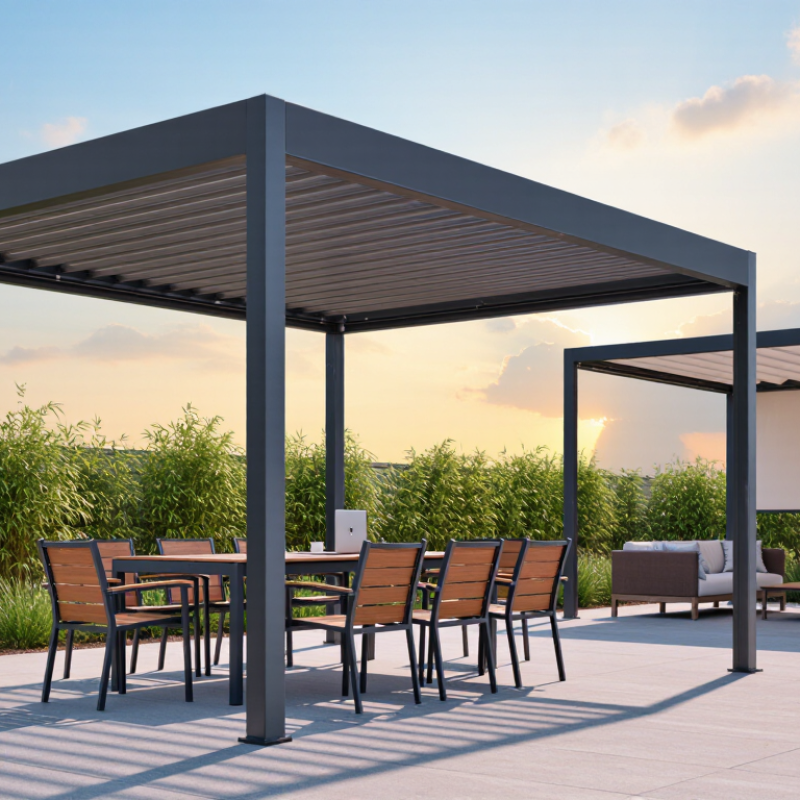
7 Best Automatic Pergola Systems for 2026

Automatic Pergolas Defined: Retractable Roofs, Louvers, Motors, and Controls

Automatic pergolas use either a retractable fabric roof or adjustable louvers. Fabric slides along tracks, opening the sky or creating shade. Louvers rotate to tune sunlight and shed light rain, but they are not automatically waterproof. That distinction matters. A motor moves the roof; controls tell it when and how to move. Wall switches are simple, while remotes and apps add convenience. Wind and rain sensors can trigger preset responses, though they cannot replace sensible operation during severe weather.

Sizing and installation shape performance. Ask how the frame drains, where water exits, and whether the motor has a manual override. Watch the roof through a full cycle: it should move evenly, without scraping or pooling. The U.S. Department of Energy’s 2021 Buildings Energy Data Book attributes roughly 40% of U.S. energy use and 75% of electricity use to buildings. That context makes shade worth considering, but it does not prove a pergola will cut a particular home’s energy bill. Orientation, glazing, climate, and user habits all matter. I would treat automation as a comfort tool, not a guaranteed energy upgrade. Controls also need thought: a well-placed switch may be more useful than an app nobody opens.

How Sensors and Drives Work: IP65 Protection Under IEC 60529

7 Best Automatic Pergola Systems for 2026

How Sensors and Drives Work: IP65 Protection Under IEC 60529

Automatic pergolas pair sensors with motorized drives to react to changing outdoor conditions. A wind sensor can trigger retraction when gusts rise, while rain or sunlight sensors support different comfort settings. The drive then moves the louvres or canopy, often stopping at preset limits. Small alignment errors matter. A sensor facing a sheltered wall may respond too late.

IP65 is an enclosure rating defined by IEC 60529. The first digit, 6, means dust-tight; the second, 5, indicates protection against water jets from any direction under specified test conditions. It does not mean the unit can be submerged. Also, an IP65 motor does not make every cable, connector, or control box equally protected. Check each component’s rating and installation requirements.

Tips: Ask which parts carry the IP65 rating, and inspect cable-entry seals after installation. Keep sensors clear of leaves and grime. Test the system in calm conditions before relying on automatic movement. A rain sensor may not detect every brief shower, and wind thresholds need careful setup. That limitation is easy to overlook.

7 Best Automatic Pergola Systems for 2026 - How Sensors and Drives Work: IP65 Protection Under IEC 60529

System Configuration Typical Sensor Input Drive and Control Method Typical Automatic Response IP65 and IEC 60529 Considerations
Rain-responsive louvered roof Rain sensor, often using a water-sensitive surface Motorized louvers operated by a control unit; the drive may be a geared motor or linear actuator, depending on the design. Closes or adjusts the louvers when rain is detected. The exact position and behavior depend on the control settings and roof design. IP65 means dust-tight and protected against water jets under IEC 60529. Check the rating of the sensor, controller, and drive separately.
Wind-responsive retractable canopy Anemometer or another wind-detection device Motorized fabric or panel drive connected to a wind-safety controller. May retract the canopy when wind exceeds its configured threshold. The safe response varies by system; follow its operating instructions. An IP65-rated enclosure is protected against dust ingress and water jets, but IP65 alone does not establish wind resistance or suitability for every outdoor installation.
Sun-tracking louver system Sunlight or illuminance sensor Motorized louvers controlled by a sensor interface or automation controller. Adjusts louver angle in response to measured sunlight when enabled and configured. Confirm that exposed sensor and electrical enclosures have the required protection rating. IP ratings apply to specified enclosures or components, not automatically to the complete pergola.
Combined rain-and-wind safety system Rain sensor plus anemometer or wind sensor Controller processes sensor signals and sends commands to the roof drive. Can use different programmed actions for rain and strong wind. Sensor priority and the final safe position are system-specific. IEC 60529 classifies enclosure ingress protection. IP65 indicates dust-tight protection and protection against water jets; it does not mean immersion-proof.
Weather-station-controlled pergola Configured combination of sensors, such as wind, rain, temperature, or sunlight Central controller operates one or more motorized roof or shade drives. Runs programmed responses based on available sensor readings and user settings. Not every weather station includes every sensor. Check the IP rating and installation requirements for each outdoor component. Cable entries, connectors, and installation details can affect protection in service.
Temperature- or frost-aware louver system Temperature sensor; frost detection may be a configured function rather than a dedicated sensor Motor drive controlled by a controller using temperature readings and configured rules. May limit or alter automatic movement in configured temperature conditions. It should not be assumed to detect ice unless that function is specified. IP65 does not certify operation at a particular temperature. Check the component’s stated operating-temperature range separately.
Multi-sensor smart-control system One or more compatible weather sensors, with optional user input through a control interface Controller coordinates motorized louvers, screens, or canopy drives; control may be local or connected to a wider automation system. Can combine sensor-based routines with manual commands. Available functions depend on controller compatibility and configuration. Verify the IEC 60529 IP rating for each relevant enclosure and the installation conditions. IP65 covers dust and water-jet protection only, not impact, corrosion, or immersion performance.

Selection note: These are generic system configurations, not a ranking of specific products. Sensor thresholds, drive type, operating limits, and protective ratings vary by design. Verify the technical documentation for the complete installed system before purchase or installation.

Seven Automatic Pergola Types Compared by Roof Design and Control System

Automatic pergolas differ most in how the roof moves and how much control the user has. Rotating-louver roofs tilt aluminum blades to admit sun or shed light rain. A wall switch or remote is simple; rain sensors can close the blades automatically. They are not sealed roofs, so check drainage details before choosing one.

Retractable fabric roofs gather into a compact stack and suit people who want open sky on demand. Motorized hard panels slide back for a more solid feel, while folding insulated panels can offer better shade and reduce heat gain.

Sliding glass roof panels preserve daylight, but they need regular cleaning and careful water management. Each option has a different balance of openness, weather protection, and maintenance.

Control systems range from basic remotes to apps and weather sensors. Hybrid systems pair adjustable louvers with motorized side screens, useful when low-angle sun reaches beneath the roof. Sensor-led systems can respond to wind or rain, though settings and local exposure matter. A sensor is not a substitute for checking the structure’s rated limits. Short power interruptions can also leave some systems inconvenient to operate.

Small detail, big impact. Compare noise, manual backup, drainage, and service access alongside roof style. I would not assume the most automated option is automatically the easiest to live with.

Wind-Load Selection: Apply Site-Specific Criteria From ASCE/SEI 7-22

Wind-load selection for an automatic pergola should start with the site, not a generic wind-speed claim. ASCE/SEI 7-22 provides a framework for evaluating wind effects, while the applicable design also depends on locally adopted codes and project conditions. A qualified designer should check risk category, mapped wind speed, exposure, topography, and pressure zones. Coastal terrain, open fields, and a nearby ridge can create very different demands. Small details matter.

Record how the pergola behaves in each operating position. Open louvers, closed louvers, and lowered screens may expose the structure to different forces. Ask for engineering documents that identify design assumptions, connection details, and the required load path from the roof through posts into the supporting structure or footings. A strong frame with weak anchors is not a sound system. That is easy to overlook. Also confirm how the unit should be secured when high winds are forecast; automation is not a substitute for a tested wind strategy. Site measurements can reveal awkward conditions, such as a wall that channels gusts or paving that cannot support the specified anchors. Those findings may change the selection, and sometimes the first estimate needs revisiting.

2026 Specification Checklist: Verify Drainage, Electrical Safety, Warranty, and Installation

7 Best Automatic Pergola Systems for 2026

A pergola’s specification sheet matters as much as its appearance. Before choosing a system, check how rainwater leaves the roof. Look for stated gutter capacity, outlet locations, and instructions for connecting downpipes. A narrow outlet can overflow during a sudden storm. Ask where water will discharge, especially beside doors, paving, or planted beds. Details vary by site, so confirm the design with the installer.

Electrical safety deserves careful review. Confirm the motor’s power requirements, cable route, and protection from moisture. Ask who handles electrical connections and whether the work needs a qualified electrician in your area. Do not assume an outdoor rating covers every exposed connection. Warranty terms also need a close read: check coverage periods, exclusions, maintenance duties, and whether installation must follow specific instructions. The fine print can be easy to miss.

Tips: Request a written installation scope, including foundations, drainage, wiring, and cleanup. Photograph the finished connections and keep the manual with your warranty documents. Check that the structure sits level and that moving slats operate smoothly. If anything feels unclear, pause and ask for clarification; that small delay may prevent an expensive correction later. There is no perfect checklist, and site conditions can complicate even a tidy plan.

Contact us

Let's Get Started!

Competitive Pricing and Exceptional Service!