10 Best Office Furniture Stores for Global Buyers

Choosing furniture for an office can look simple. Then a delivery arrives with the wrong desk depth, a chair that feels stiff, or unclear assembly instructions. For global buyers, those details matter as much as the product photos. A dependable Office Furniture Store should explain dimensions, materials, warranties, delivery terms, and support before an order is placed.

Ergonomics expert Dr. Alan Hedge is often associated with the practical reminder, “The best posture is the next posture.” It captures an important buying principle: good furniture should support movement, not force people into one fixed position. A chair’s adjustable arms, a desk’s working height, and the clearance beneath a tabletop can shape daily comfort. Small details count.

This guide compares 10 stores through a buyer-focused lens. It considers product range, customization, published specifications, and the clarity of purchasing information. International shoppers should also check shipping coverage, lead times, local assembly options, and return conditions directly with each seller. Availability can change by region. So can pricing.

No single shortlist suits every workplace. A startup furnishing six desks may value quick delivery, while a design studio may need finishes matched across several rooms. The comparisons here offer a starting point, not a universal verdict. That distinction matters. Readers should verify current terms and test samples when possible before making a large purchase.
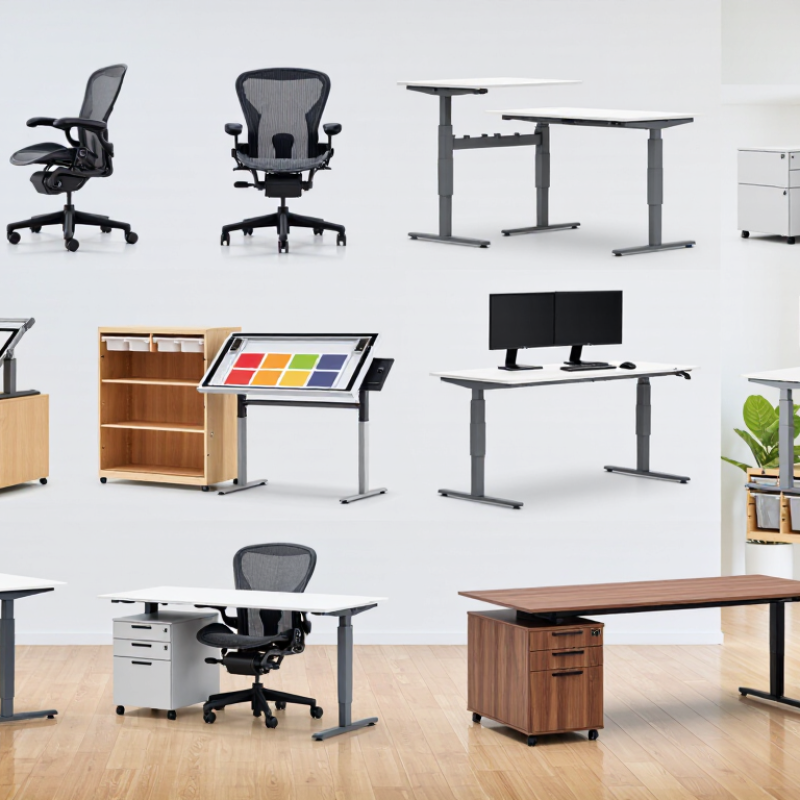
10 Best Office Furniture Stores for Global Buyers

What Global Buyers Need from an Office Furniture Store

Global buyers need more than attractive product photos. An office furniture store should provide clear dimensions, material details, assembly instructions, and realistic delivery estimates. A desk that fits a showroom may not fit a narrow elevator or a small workspace. Small details matter. Ask for product drawings and confirm measurements before placing a large order.

Reliable communication is just as important. Buyers should know who handles shipping updates, damaged-item reports, and replacement parts. Request written information about packaging, lead times, and any extra charges that may affect the final cost. If the store serves several regions, check whether its guidance reflects your destination’s workplace needs and product requirements. Do not assume every market uses the same desk heights or electrical fittings.

Look beyond the initial quote. Chairs may need adjustable arms, firm lumbar support, and fabrics suited to frequent use. Ask whether samples are available, especially when color and texture matter across a whole floor. A polished catalog can still leave practical questions unanswered. I would compare a few suppliers using the same checklist, though even that cannot predict every delay or fit issue. A responsive store that admits uncertainty may be more useful than one that promises everything.

How to Evaluate Furniture Retailers for International Purchasing

Choosing office furniture for an international project takes more than comparing prices and photographs. Check whether a retailer provides clear dimensions, material specifications, and assembly instructions in a format your team can use. A desk listed as “compact” may still be too wide for a narrow office doorway. Details matter. Ask for a sample finish or close-up images before approving a large order.

Review how the retailer handles shipping, protective packaging, and delivery estimates. Ask who coordinates freight, what information is needed for customs clearance, and how damaged items are reported. Request written lead times for each product, not just a general estimate. A neat product page is not proof of reliable fulfillment. Ask for evidence, such as references from comparable projects or sample order documents, while protecting confidential information.

Communication is another useful test. Send a specific question about chair dimensions or replacement parts and note how clearly the response addresses it. Check warranty terms, spare-part availability, and support hours across time zones. Compare the full landed cost, including delivery and any local handling fees. A spreadsheet helps, but it can miss awkward details, like unclear assembly labels. I would not treat one delayed reply as decisive; repeated vague answers are more telling.

10 Best Office Furniture Stores for Global Buyers - How to Evaluate Furniture Retailers for International Purchasing

Evaluation dimension What to check Evidence to request Why it matters for global purchasing
Export experience Experience shipping office furniture to the destination country and handling export documentation. References for comparable shipments, sample shipping documents, and a list of supported destinations. International shipments involve requirements and processes that may differ by destination.
Product specifications Dimensions, materials, finishes, assembly requirements, and product tolerances are clearly documented. Current specification sheets, drawings, material descriptions, and assembly instructions. Clear specifications help buyers compare products and verify that items suit the intended space and use.
Product compliance Applicable safety, chemical, labeling, and workplace requirements for the destination market. Relevant test reports, declarations, certificates, and the standards or regulations they cover. Requirements vary by jurisdiction and product type; buyers should confirm applicability before ordering.
Shipping terms and cost Which party arranges transport, insurance, export clearance, and delivery under the quoted trade term. A written quotation stating the Incoterms® rule, named place or port, shipment method, and included charges. Incoterms® rules allocate specific responsibilities, costs, and risks between seller and buyer.
Customs documentation Ability to provide accurate commercial invoices, packing lists, and transport documents; confirm product classification with the buyer. Document samples and confirmation of the data provided for customs entry, such as product description, origin, and value. Customs duties, taxes, and import rules depend on the destination and product classification.
Packaging and damage prevention Packaging suitability for long-distance transport, handling, moisture exposure, and the selected shipping method. Packaging specifications, carton or pallet dimensions, protection details, and loading photographs when available. Furniture can be bulky and vulnerable to impact or surface damage during multiple handling stages.
Lead time and order capacity Production or dispatch time, order quantity limits, back-order risks, and the effect of customization on timing. A dated schedule showing order confirmation, production, dispatch, transit, and delivery milestones. Long-distance delivery and customs processing can affect project schedules beyond the seller’s stated dispatch time.
Warranty and after-sales support Warranty coverage, exclusions, claim process, spare-parts availability, and who pays return or replacement freight. Written warranty terms, claim instructions, response channels, and parts-support information. Resolving a defect across borders may involve additional shipping time, cost, and coordination.
Payment and currency Accepted currencies and payment methods, deposit requirements, payment milestones, and applicable bank charges. A pro forma invoice with currency, payment schedule, beneficiary details, and cancellation or refund terms. Currency conversion, transfer fees, and payment timing can affect the total purchasing cost.
Installation and local delivery Whether delivery is curbside, inside delivery, or includes assembly; confirm site access and local service coverage. A written delivery scope, assembly instructions, site requirements, and details of any local service partners. A shipment arriving at a port or building entrance may not include final placement or assembly.

Evaluation note: Confirm destination-country requirements with the relevant customs authority or a qualified import professional. Incoterms® is a registered trademark of the International Chamber of Commerce.

Ten Office Furniture Stores Serving Buyers Around the World

For global buyers, an office furniture store must do more than display attractive desks. It should explain delivery coverage, shipping costs, assembly options, and what happens if a part arrives damaged. The ten store types worth comparing include international online retailers, regional showroom chains, contract furniture specialists, ergonomic seating shops, modular workspace suppliers, local dealers, used-furniture outlets, custom manufacturers, small-office retailers, and commercial project suppliers. Each serves different needs. Details matter.

A showroom lets buyers test chair support and desk height, while online catalogs make product comparisons easier across time zones. Ask for exact dimensions, material samples, warranty terms, and clear delivery estimates before ordering. For overseas projects, confirm whether installation is included or handled locally. A low price can become less appealing when freight, duties, or replacement parts are unclear. Not always.


There is no perfect store for every country or office. Product availability and service quality can vary by region, even within one retailer’s network. Compare written specifications rather than relying on polished photos, and request a sample order when practical. I would still leave room for uncertainty: color can look different on screen, and delivery dates can shift. A careful shortlist balances price, fit, support, and realistic logistics.

Comparing Product Selection, Pricing, and Customization

Global buyers should compare office furniture by usable range, not catalogue size alone. A supplier may offer dozens of chair finishes but few compatible desk frames or replacement parts. Check dimensions, materials, warranty terms, minimum order quantities, and regional delivery options. For a small office, a modular desk with adjustable legs may be more useful than a highly customized model. Ask for sample swatches and a full specification sheet before approving a large order.

Price comparisons need to include freight, duties, assembly, and packaging, not just the unit price. The 2024 Global Office Fit-Out Cost Guide compares project costs across cities and fit-out scopes, a reminder that local conditions can change the real budget. Custom colors, cut-outs, and nonstandard sizes can add cost and delay. Get the surcharge and lead time in writing. Small details matter. EPA’s Advancing Sustainable Materials Management report estimated 12.1 million tons of furniture and furnishings entered the U.S. waste stream in 2018, with 80.1% landfilled. That figure is U.S.-specific, not a global forecast, but it supports asking whether damaged parts can be replaced. I would still weigh durability against upfront price; that trade-off is easy to misjudge from a showroom sample alone.

10 Best Office Furniture Stores for Global Buyers

A practical framework for comparing product selection, pricing, and customization.

The bars show a suggested 100-point buyer evaluation framework, not verified ratings of specific retailers. Check each seller’s current product range, shipping terms, prices, and customization options before purchasing.

Assessing Shipping, Compliance, and After-Sales Support

Global buyers should judge office furniture stores by delivery evidence, not attractive freight estimates. The World Bank’s 2023 Logistics Performance Index reports an average 44 days for goods to move between origin and destination ports, with about 60% of that time spent at sea. A desk may then face customs checks, local delivery, or assembly delays. Ask for a written shipping timeline, shipment tracking, packaging specifications, and a clear process for reporting transit damage.

Compliance is destination-specific. Request product test reports, material details, and any required labeling or timber documentation before placing a large order. Confirm who handles customs paperwork and which party pays duties. After-sales support matters just as much: check warranty coverage, response times, replacement-part availability, and whether damaged panels can be shipped separately. A polished sales email is not proof of dependable service. Ask for sample claim procedures.

Tips: Get freight terms, delivery address, and unloading responsibilities in writing. Photograph cartons when they arrive, including crushed corners and torn wrapping. Keep all records. One detail is easy to miss: confirm whether the quoted delivery includes moving furniture inside the building. Recheck the terms; they can be vague.

Contact us

Let's Get Started!

Competitive Pricing and Exceptional Service!