What Is the Best Salon Furniture Factory in 2026?
Choosing the best salon furniture factory in 2026 requires more than comparing catalog photos or advertised prices. Salon owners need furniture that performs under daily pressure, from shampoo chairs exposed to water to styling stations touched hundreds of times each week. A reliable factory should show practical manufacturing experience, stable material sourcing, consistent quality control, and responsive after-sales support. Small details matter. Smooth drawer runners, reinforced chair bases, sealed wood edges, and easy-clean upholstery can influence a salon’s comfort and operating costs.
This guide examines factories through evidence rather than impressive promises. We consider production capacity, customization skills, safety testing, delivery reliability, and communication throughout an order. Factory visits, sample reviews, and feedback from working salon professionals can reveal more than polished brochures. A strong supplier should explain its foam density, frame construction, surface treatments, and warranty terms clearly. It should also understand different salon layouts, plumbing needs, customer comfort, and local compliance expectations. No factory is perfect. Even experienced manufacturers may miss a deadline or misunderstand a design request. That possibility deserves honest attention. The best choice depends on the salon’s budget, style, market, and growth plans. A beautiful chair is not enough. It must remain comfortable, stable, hygienic, and repairable after months of real use.
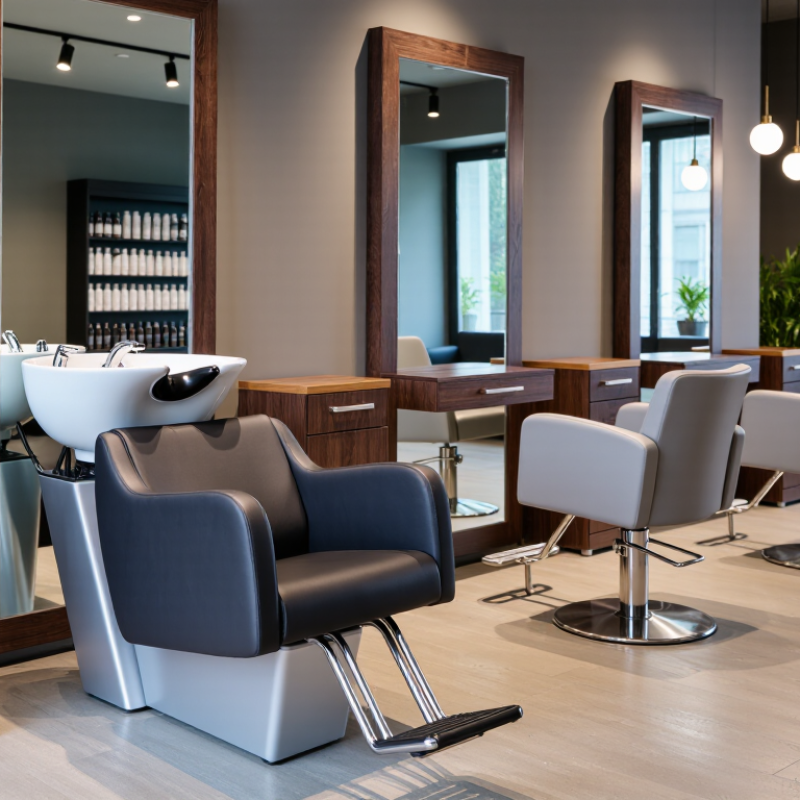
Salon Furniture Factories: Definition, Scope, and Industry Role
What Is the Best Salon Furniture Factory in 2026?
A salon furniture factory designs, manufactures, tests, and ships equipment for professional beauty spaces. Its scope includes styling chairs, shampoo units, reception desks, trolleys, mirrors, and storage systems. The factory also manages materials, production tolerances, packaging, and after-sales support.
Its industry role extends beyond making attractive products. Furniture affects posture, cleaning routines, customer movement, and daily service speed.
The Business Research Company reported that the global beauty salons market grew from 237.5 billion dollars in 2023 to 255.4 billion dollars in 2024. The U.S. Bureau of Labor Statistics projects 8% employment growth for barbers, hairstylists, and cosmetologists from 2022 to 2032. More professionals can increase demand for durable, space-efficient furniture.
Still, market growth does not prove factory quality. Published estimates vary. I would inspect material specifications, load testing, replacement-part access, and factory audit records. No factory is perfect. That is worth admitting. The best choice in 2026 should match workflow, room size, maintenance needs, and local compliance requirements. A low price may hide weak hinges, poor foam recovery, or difficult installation.
Tips: Request a sample before ordering. Test hydraulic movement repeatedly. Check seam strength and surface cleaning performance. Ask for measurable lead times, not vague promises. Compare warranty terms with actual repair procedures. Visit the production site when possible. Photos can mislead.
Key Criteria for Evaluating Salon Furniture Factories in 2026
What Is the Best Salon Furniture Factory in 2026?
The best salon furniture factory should be judged by measurable performance, not showroom shine. Grand View Research valued the global salon services market at about USD 215.65 billion in 2022, with projected annual growth of 6.9% through 2030. This growth increases demand for durable, comfortable, and easily maintained furniture. A factory should provide tested load ratings, moisture-resistant surfaces, replaceable parts, and clear production records. Ask for material specifications, not broad promises.
Ergonomics also matters. The International Ergonomics Association connects well-designed workstations with reduced physical strain and better task efficiency. Check chair height ranges, basin support, footrest angles, and technician reach distances. Sit in the chair for ten minutes. Small discomfort becomes expensive after hundreds of appointments. It happens.
Reliable factories should operate documented quality systems, such as ISO 9001-based procedures, while allowing independent inspections before shipment. Confirm sample approval, carton testing, spare-part policies, and realistic lead times. A factory that refuses detailed answers is difficult to trust. However, certification alone proves little; weak inspections can still produce uneven stitching or unstable hydraulic pumps. The best evaluation combines factory evidence, user feedback, and repeated sample testing. Pricing remains important, but the cheapest quotation may hide replacement costs, delays, or uncomfortable designs. My own standard would be stricter: judge the furniture after six months of daily use, not on delivery day.
Top Global Salon Furniture Factory Types and Manufacturing Strengths
What Is the Best Salon Furniture Factory in 2026?
The best factory depends on product type, volume, and target market. According to Grand View Research, the global beauty salon market was valued at about US$230 billion in 2023. This growth increases demand for durable styling chairs, shampoo units, reception desks, and compact storage. Large integrated factories usually offer stronger metal cutting, foam molding, powder coating, and upholstery control. They suit multi-location salon projects with repeated designs.
Specialized factories can provide more flexible customization. Their strengths include handcrafted woodwork, unusual dimensions, and faster sample adjustments. According to the International Trade Centre, furniture remains a major global manufacturing and export category, but quality can vary sharply between production regions. A reliable factory should show material specifications, factory inspection records, load-testing results, and stable lead-time data. ISO 9001-based quality systems can support consistency, although certification alone proves little. That is an uncomfortable point. A polished showroom may hide weak internal controls.
Tips: Request one production sample before signing a large order. Test hydraulic lifting, stitching, weld points, drainage, and surface resistance. Ask for the foam density and board thickness in writing. The European Chemicals Agency also highlights the importance of controlling chemical substances in manufactured goods. Therefore, request compliance documents for coatings, adhesives, and upholstery materials. Visit the factory if possible. Photos are not enough. A factory with strong engineering may still lack after-sales support, while a smaller workshop may deliver better details but slower capacity. Assess both strengths honestly.
How to read this chart: The benchmark compares four common salon furniture factory types by five practical manufacturing capabilities: customization flexibility, scalable output, lead-time control, material integration, and export readiness. Scores use a normalized 0–100 analytical scale based on the typical characteristics of each production model rather than company or brand data.
How to Compare Quality, Design, Pricing, and Customization
Choosing the best salon furniture factory in 2026 requires more than comparing catalog photos. Quality should be checked through material samples, weld consistency, edge finishing, and hardware performance. Ask for foam density, upholstery specifications, load tests, and production photos. A strong factory explains these details clearly. It should also provide inspection records and a realistic warranty. I would examine a shampoo unit’s basin seal, chair lift movement, and drawer alignment before approving a large order. Small defects become expensive in busy salons.
Design must support comfort, cleaning, workflow, and visual identity. Compare seat dimensions, counter height, cable routing, and available finishes. Customization is valuable only when drawings, prototypes, and revision limits are clearly managed. Ask for samples. Request a pre-production unit when dimensions matter. Pricing needs a wider lens. Include packaging, freight, installation, spare parts, taxes, minimum order quantities, and lead time. The cheapest quotation may hide weak hardware or costly delays. That is not always true, but it deserves questions.
Tips: Build a comparison sheet with weighted scores for quality, design, pricing, and customization. Verify test documents directly, not only through polished presentations. Ask how rejected components are recorded and replaced. Confirm color samples under warm and cool lighting. Leave room for revisions; my early specifications have sometimes been too optimistic. A factory that welcomes precise questions is usually easier to trust. Still, verify every promise in writing.
Selecting the Best Salon Furniture Factory for Different Salon Needs
What Is the Best Salon Furniture Factory in 2026?
Selecting the best salon furniture factory starts with your salon’s actual workflow. A high-volume barbershop needs durable chairs, quick-clean surfaces, and reliable hydraulic pumps. A luxury salon may prioritize soft upholstery, quiet operation, and coordinated reception furniture. Compact studios need wall-mounted storage and narrow workstations. Measure the room twice. A beautiful catalog cannot fix poor circulation.
The U.S. Bureau of Labor Statistics projects 8% employment growth for barbers, hairstylists, and cosmetologists from 2022 to 2032, with about 89,400 annual openings. This suggests that ergonomic furniture will matter as staffing and customer demand increase. Ask factories for seat-load tests, material specifications, replacement-part policies, and documented warranty terms. For wet areas, request resistance data for moisture, disinfectants, and repeated cleaning. “Easy to clean” is not enough.
Grand View Research estimated the global beauty salon market at approximately USD 190.8 billion in 2022, with continued growth projected through 2030. That expansion may encourage faster production, but speed can weaken quality control. Inspect sample welds, stitching, drawer alignment, and packaging before placing a large order. No factory is perfect. I would still question impressive photos, unclear delivery dates, and vague after-sales support. A factory that listens to different salon needs is usually more valuable than one offering the largest catalog.