What Is Birch Plywood and What Is It Used For?

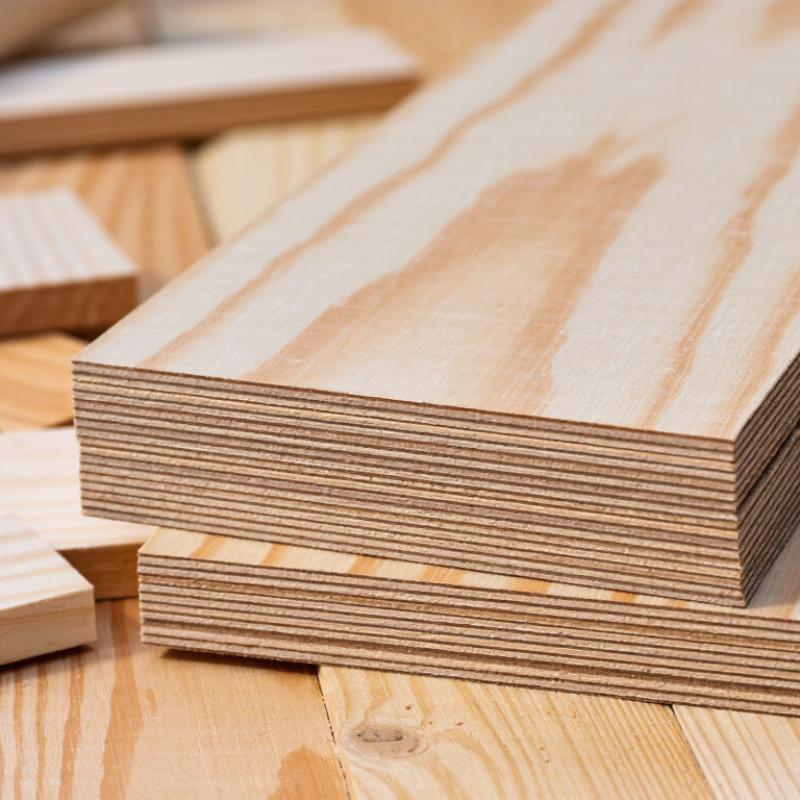
Birch Plywood is a strong, smooth, and versatile engineered wood panel made from thin birch veneers. Each layer is bonded with alternating grain directions. This cross-grain construction improves stability and reduces splitting. The exposed edges show attractive, repeated layers. They often become part of the design.

Timber engineer Dr. Robert J. Ross explains, “Plywood gains much of its strength from the cooperation of its cross-oriented veneer layers.” This principle helps explain why Birch Plywood appears in furniture, cabinets, shop fittings, flooring systems, packaging, and interior architecture. A 18-millimeter panel can support shelves, benches, and drawer components. Its pale surface also accepts paint, oil, laminate, or clear finish. Sanded birch creates a clean, almost furniture-like appearance.

It is not waterproof by default. That matters.

Different grades suit different conditions. Interior-grade panels work well in dry rooms. Exterior-bonded sheets offer better resistance to occasional moisture. Marine applications require more specialized specifications. Buyers should check veneer quality, adhesive classification, thickness tolerance, and formaldehyde emissions. Product labels can vary between suppliers and regions.

Birch Plywood is not flawless. It can warp when stored badly. Its edges may absorb moisture quickly. Cutting can also expose small voids or uneven patches, especially in lower grades. These details are easy to ignore during planning. They should not be. This guide examines Birch Plywood’s composition, key advantages, common uses, limitations, and practical selection advice. It focuses on what the material does in real workshops, not only what brochures promise.
What Is Birch Plywood and What Is It Used For?

Birch Plywood Defined: Structure, Species, and Typical 650–750 kg/m³ Density

Birch plywood is an engineered wood panel made from thin birch veneers. Each layer is placed with its grain perpendicular to the next. This cross-laminated structure improves stiffness, dimensional stability, and resistance to splitting. Its pale surface, fine grain, and clean edges also make it suitable for visible furniture parts.

Birch plywood commonly uses veneers from silver birch or related birch species. The exact appearance changes with forest origin, veneer grade, and manufacturing conditions. Typical density falls between 650 and 750 kg/m³ at standard moisture levels. However, this figure is not fixed. Moisture content, adhesive layers, panel thickness, and testing methods can shift the result.

It feels solid in the hand.

In practical work, this plywood serves cabinet components, drawers, shelving, workbenches, interior wall panels, and lightweight structural assemblies. Its layered edges can be exposed, sanded, or sealed for a deliberate striped effect. Screws hold well when pilot holes are used, although thin panels may still split near an edge. Cutting can produce a clean line, but blunt blades may cause surface tear-out. I have found that sanding pressure matters more than expected; aggressive sanding can quickly soften the crisp veneer. Designers should also check formaldehyde class, moisture resistance, and load requirements before specifying a panel. Density alone does not prove quality.

How Birch Plywood Is Made: Cross-Grained Veneers and EN 314 Bonding Classes

Birch plywood is built from thin birch veneers, placed with their grain directions crossing. This cross-grained structure limits warping and spreads loads across the panel. It also gives birch plywood a smooth face, pale colour, and clean machining behaviour. FAO’s Forestry Production and Trade database reported global wood-based panel production at about 370 million cubic metres in 2022, showing the scale of panel manufacturing and quality control required.

Bonding quality matters as much as veneer arrangement. EN 314-2 defines three bonding classes: Class 1 for dry conditions, Class 2 for humid interiors, and Class 3 for exterior exposure. These classes relate to bond durability, not simply panel appearance.

A Class 1 panel may suit heated rooms, furniture, or interior cabinets. Class 2 is more suitable for kitchens, bathrooms, or covered structures with occasional moisture. Class 3 must withstand repeated weather exposure when correctly manufactured and protected.

The veneers are dried, graded, glued, stacked crosswise, and pressed under controlled heat and pressure. Manufacturers then trim and sand the panel, checking thickness, surface quality, and bonding performance. EN 314 testing evaluates whether adhesive joints resist moisture-related stress. The standard is useful, not magical. A missed edge seal can defeat a correct specification. The European Panel Federation’s market reporting also highlights moisture resistance and formaldehyde control as recurring purchasing concerns. In practice, users should verify the declared class, thickness tolerance, and intended exposure before cutting the first sheet.

Birch Plywood Grades and Standards: BB/BB, B/BB, EN 636, and E1 Limits

What Is Birch Plywood and What Is It Used For?

Birch plywood is made from thin birch veneers arranged in alternating directions. This cross-layer structure gives panels good stiffness, clean edges, and reliable screw holding. It is commonly used for cabinets, drawers, furniture parts, workbenches, and interior wall details. In a workshop, I find its smooth surface especially useful when edges remain visible.

The grade affects appearance more than basic strength. BB/BB means both faces contain repaired knots, small patches, and limited color variation. It suits painted furniture, structural boxes, and hidden cabinet surfaces. B/BB provides one cleaner B face and one more repaired BB face. The B side works better as a visible panel, while the BB side can face inward. Always inspect the actual sheet. Grades can feel less consistent than their labels suggest.

EN 636 describes plywood performance by service environment. EN 636-1 is intended for dry conditions, EN 636-2 for humid conditions, and EN 636-3 for exterior exposure. These categories do not replace proper sealing or edge protection. Moisture often enters through cut edges first. E1 refers to low formaldehyde emission, commonly limited to 0.124 mg/m³ under the relevant test method. Check the supplier’s declaration and the applicable local requirement, because test systems can differ. A certified E1 panel is a better starting point, not a guarantee of perfect indoor air quality. That distinction deserves more attention.

Performance Profile: Strength, Stability, and Common 3–30 mm Thicknesses

Birch plywood is made from thin birch veneers layered with alternating grain directions. This cross-laminated structure gives the panel strong resistance to bending and splitting. Its light, uniform surface also accepts paint, clear finishes, and machining with predictable results. The pale edges reveal many compact layers, which is often useful in visible furniture details.

Thickness affects both performance and handling. The common 3–6 mm sheets suit drawer bottoms, curved components, model work, and lightweight cabinet backs. Panels from 9–18 mm provide a practical balance for shelves, boxes, desks, worktables, and interior joinery. Heavier 21–30 mm boards feel more rigid under load, but they also weigh considerably more and may require stronger supports. Thin panels flex easily. Thick panels can still sag across wide spans.

Stability is one of birch plywood’s strengths, especially when compared with solid wood exposed to changing grain movement. It is not automatically waterproof, though. Unsealed edges can absorb moisture quickly, causing swelling or surface damage. In workshop use, I would inspect each edge, check the panel’s intended environment, and avoid assuming every sheet has identical quality. Internal voids, uneven veneers, or poor storage can affect results. Birch plywood is used for cabinets, seating, shop fixtures, precision templates, and durable interior surfaces where clean edges and dependable strength matter.

What Is Birch Plywood and What Is It Used For? - Performance Profile: Strength, Stability, and Common 3–30 mm Thicknesses

Typical values and uses for unfinished birch plywood. Actual performance varies with panel grade, adhesive class, construction, moisture exposure, and applicable product standards.
Thickness Typical Construction Approx. Weight1 Performance Profile Common Uses
3 mm Usually 3 thin veneers Approx. 1.8 kg/m² Very light and flexible; limited load-bearing capacity and greater risk of edge damage. Model making, drawer bottoms, curved laminations, templates, and lightweight interior panels.
4 mm Usually 3–5 veneers Approx. 2.4 kg/m² Flexible, clean-cutting, and more stable than an equivalent solid-wood sheet. Cabinet backs, small boxes, craft work, and interior lining.
6 mm Typically 5 veneers Approx. 3.6 kg/m² Good stiffness-to-weight ratio for light-duty components; bends more readily across the face than thicker panels. Small furniture parts, cabinet components, signage, and interior partitions.
9 mm Typically 5–7 veneers Approx. 5.4 kg/m² Moderate panel stiffness with reliable screw-holding when edges are properly prepared. Shelving with short spans, cabinet carcasses, drawers, and workshop fixtures.
12 mm Typically 7–9 veneers Approx. 7.2 kg/m² Balanced strength, stability, and machinability; a common general-purpose furniture thickness. Furniture panels, worktops, cabinets, shelving, and interior joinery.
15 mm Typically 9–11 veneers Approx. 9.0 kg/m² Higher bending stiffness and improved resistance to panel deflection under moderate loads. Longer shelves, benches, stair components, cabinet sides, and shopfitting.
18 mm Typically 11–13 veneers Approx. 10.8 kg/m² Strong, rigid, and dimensionally stable; suitable for many structural furniture applications. Heavy-duty shelving, workbenches, table tops, seating, and cabinet construction.
21 mm Typically 13–15 veneers Approx. 12.6 kg/m² Very rigid panel with good screw retention and resistance to localized wear. Heavy work surfaces, transport fittings, platforms, and demanding interior assemblies.
24 mm Typically 15–17 veneers Approx. 14.4 kg/m² High stiffness and impact resistance; heavier and more difficult to handle than standard furniture panels. Industrial benches, heavy shelves, platforms, jigs, and robust furniture.
30 mm Typically 19–21 veneers Approx. 18.0 kg/m² Very high panel rigidity and excellent resistance to bending for suitably supported applications. Heavy-duty worktops, machine fixtures, structural platforms, and thick furniture components.
What It Is
Birch plywood is an engineered wood panel made by bonding multiple birch veneers with adjacent grain directions arranged at right angles.
Typical Density
Approximately 620–700 kg/m³, depending on moisture content, veneer density, adhesive, and manufacturing construction.
Key Advantages
High strength relative to weight, good dimensional stability, consistent machining quality, attractive exposed edges, and strong screw-holding performance.
Important Limitation
Standard interior birch plywood should be protected from prolonged moisture. Exterior or humid-use applications require a suitable panel grade, adhesive class, edge sealing, and surface finish.

1 Weight estimates use a representative density of approximately 600 kg/m³ and are intended for comparison; actual sheet weight changes with density and moisture content.

Birch Plywood Applications: Furniture, Cabinets, Interiors, and CNC Components

Birch plywood is made from thin birch veneers layered with alternating grain directions. This structure gives it strength, stability, and a clean edge. Its pale surface suits modern furniture, shelving, desks, and storage units. In cabinet work, the panels accept paint, clear finishes, and exposed-edge designs. The tight, even grain also makes small details look precise.

Interior designers use birch plywood for wall panels, doors, benches, partitions, and fitted interiors. Its consistent thickness helps installers create accurate joints and smooth alignments. CNC fabricators also value it for components, templates, drawer parts, and cut-out panels. It machines cleanly when the tooling is sharp and the feed rate is suitable. Still, it is not flawless. Edges can splinter, and visible voids may appear in lower-grade sheets. That small defect can change the final appearance.

Tips: Seal exposed edges, especially near sinks or damp rooms. Test a sample before full production. Check the sheet thickness with calipers, not only the label. For CNC work, use sharp cutters and support narrow pieces carefully. A good finish cannot hide every machining mistake. Choosing the right grade matters more than chasing the lowest price.

Contact us

Let's Get Started!

Competitive Pricing and Exceptional Service!