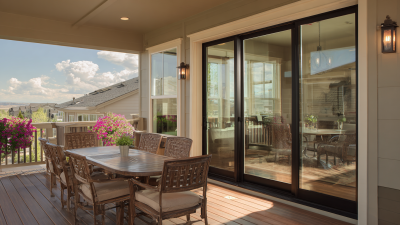
China Top 10 Double Sliding Door Manufacturers?

Choosing a Double Sliding Door manufacturer in China involves more than comparing prices or browsing attractive product photos. Buyers need to understand how each company handles design, fabrication, quality checks, packaging, and communication. This guide introduces ten manufacturers for consideration, while recognizing that “top” depends on the project. A residential renovation may require a compact, quiet system, while a hotel or office project may prioritize frequent use and consistent specifications. Details matter.

The comparison focuses on practical questions: What door materials and configurations are available? Can the supplier explain track options, glass specifications, hardware, and installation requirements? Are drawings, product data, and sample details provided clearly? These are useful signs of a supplier’s working process, though they do not guarantee a successful project. Ask for recent references, confirm production and shipping arrangements, and review the exact specifications before placing an order. Where possible, request samples or arrange an independent inspection. Small omissions can become costly later.

The manufacturers profiled here may differ in product range, export experience, customization, and support. Treat the list as a starting point, not a final endorsement. A company that suits one buyer may not suit another, and online information can be incomplete or outdated. Verify important claims directly, compare like-for-like quotations, and discuss installation conditions early. Even a strong-looking catalog cannot answer every question. A careful shortlist, followed by clear communication and documented requirements, gives buyers a more dependable basis for choosing a Chinese Double Sliding Door supplier.
China Top 10 Double Sliding Door Manufacturers?

Double Sliding Doors in China: Core Designs, Materials, and 2-Panel Systems

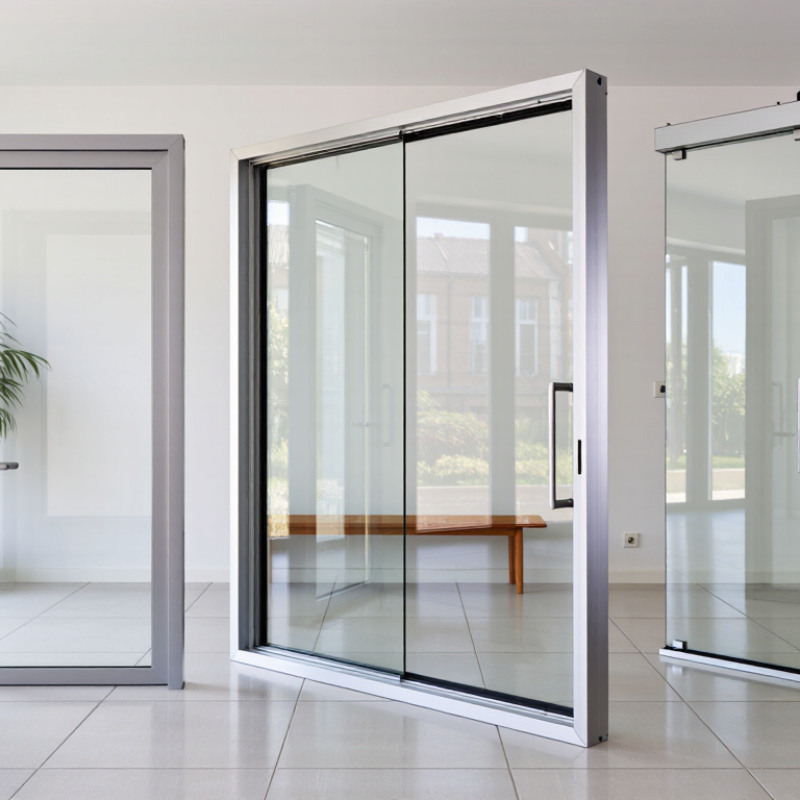
Double sliding doors are common in Chinese residential and commercial projects because they open wide without needing a full swing area. In a typical two-panel system, one panel slides behind the other along a track. That sounds simple. The track, rollers, and frame still need to work as a set. On site, even a small floor-level difference can make the panels feel rough or leave an uneven gap.

Material choice affects weight, upkeep, and appearance. Aluminum frames are often selected for their lower weight and resistance to moisture, while uPVC can suit projects where thermal performance and routine maintenance matter. Timber offers a warmer look, but changing humidity may affect its fit. Glazing also deserves attention: double glazing can improve insulation, while laminated glass may be considered where impact safety is a concern. The right specification depends on room conditions, opening size, and daily use.

For two-panel doors, check how much clear opening remains when one panel is parked behind the other. A narrow opening can disappoint in a busy kitchen or patio entrance. Ask about track drainage, soft-close options, and roller adjustment access before ordering. These details are easy to miss on a drawing. I would also verify the actual wall opening and finished floor height; measurements taken too early can be wrong.
How to Assess China’s Top 10 Manufacturers by Capacity, Certifications, and Test Data

A credible comparison of China’s leading double sliding door manufacturers should start with verified capacity, not catalog claims. Ask for annual output by door type, production-line details, typical lead times, and recent shipment records. Confirm figures through a factory audit or consistent third-party records.

Capacity alone proves little. A large line can still produce uneven frame tolerances or delayed orders.

Check whether certificates cover the exact door system, size, and hardware being quoted. Then request full test reports for air leakage, water penetration, structural pressure, and thermal performance. Standards such as NAFS and relevant ASTM methods provide useful benchmarks; a certificate for another model is not equivalent evidence.

The U.S. Department of Energy’s Energy Saver guidance says windows account for 25%–30% of residential heating and cooling energy use, making verified thermal data commercially relevant.

Numbers can mislead. Compare whole-door U-factor and air-leakage results, not glass-only figures, and check the test laboratory’s accreditation. A practical shortlist should record report dates, specimen dimensions, pass criteria, and unresolved gaps.

Self-reported capacity is still common, and even careful audits cannot guarantee every production run will match the test sample.

China’s Top 10 Double Sliding Door Manufacturers: Profiles and Product Ranges

China’s Top 10 Double Sliding Door Manufacturers: Profiles and Product Ranges

A useful comparison of Chinese manufacturers starts with their specialties, not a simple ranking. Some focus on slim-frame aluminum doors for bright living rooms. Others produce thermally improved systems for exterior openings, where weather seals and frame construction matter. There are also manufacturers offering uPVC, wood-aluminum, or heavier-duty options. Product ranges may include standard patio doors, custom widths, and different glass configurations. The categories overlap. That can make comparisons less tidy.

Interior-focused suppliers often make room dividers and partition doors with lighter frames. Other factories specialize in pocket systems, where panels slide into a wall cavity, or multi-panel doors for wider openings. Some offer coordinated screens, tracks, handles, and thresholds. Check whether these are included or priced separately. Small details matter.

When reviewing ten supplier profiles, compare more than catalog photos. Ask for frame and panel dimensions, available finishes, glass specifications, track capacity, and installation guidance. Request drawings for the intended opening. A smooth showroom sample does not guarantee the same feel after repeated daily use. I would also check how the supplier handles nonstandard sizes; this is where vague answers can surface. Product range is useful, but clear technical documents and consistent communication are stronger signs of a dependable fit.

Compare Air and Water Ratings: EN 12207 Classes 1–4 and EN 12208 Classes 1A–9A

China Top 10 Double Sliding Door Manufacturers?

For double sliding doors, compare test evidence rather than relying on a “top 10” label. EN 12207 rates air permeability from Class 1 to Class 4; Class 4 indicates the tightest performance in the classification. EN 12208 rates resistance to water penetration from Class 1A to Class 9A. Higher classes withstand greater test pressure under the specified spray conditions. These ratings help compare products, but only when test reports cover comparable door sizes, configurations, and installation details.

Look closely at the tested assembly. A wide two-panel door, a low threshold, or different locking points can affect results. Ask for the full test report, not just a brochure number, and check that the tested seals and hardware match the offered specification. A strong laboratory rating is useful, but it does not guarantee the same result after poor installation or inadequate drainage. Still, ratings can be easy to overread.

Tips: Confirm the exact EN 12207 and EN 12208 classes, test pressure, specimen dimensions, and threshold design. Ask how the installer will seal the frame-to-wall joint. One detail matters: water resistance depends on the complete assembly, not the glass alone. A little uncertainty remains if project conditions differ from the test setup, so request clarification before comparing quotations.

China Top 10 Double Sliding Door Manufacturers?

Comparing Air Permeability and Water-Tightness Ratings

EN 12207 air-permeability classes run from 1 to 4: higher classes indicate lower air leakage. EN 12208 water-tightness classes run from 1A to 9A, with higher classes tested at greater pressure.

EN 12207 — Maximum Air Permeability at 100 Pa

Lower values indicate less air leakage. Values shown are the maximum reference air permeability per unit area.

EN 12208 — Water-Tightness Test Pressure

Class 9A corresponds to a test pressure of 600 Pa. The EN 12208 Exxx designation is used for tests above 600 Pa.

These are standard classification thresholds, not ratings for specific manufacturers or products. Air-permeability and water-tightness classes measure different performance properties and should not be compared as equivalent scores.

Buyer Checklist: Review GB/T 7106-2019 Test Reports, U-Factor, and Hardware Specs

When comparing China’s double sliding door manufacturers, request complete GB/T 7106-2019 test reports, not cropped certificates. The standard covers air permeability, water tightness, and wind-pressure resistance. Check the laboratory, report date, specimen dimensions, opening configuration, and included accessories. A report for a narrow sample may not represent a wide two-panel door. Details matter.

Ask for the whole-door U-factor, its units, and the test or calculation method. Lower values generally mean less heat transfer, but compare results measured under similar conditions. Frame material, glazing, spacer bars, and panel size can all affect performance. If a supplier gives only a glass U-factor, request the complete door figure. Ask for specifics.

Review the hardware schedule, too. Confirm roller material and load rating, track design, lock points, anti-lift features, and replacement-part availability. For coastal or humid projects, ask how finishes resist corrosion and what evidence supports the claim. Even a careful checklist has limits: installation can change real-world results. I would not treat a strong laboratory report as a promise of identical performance on every building.

China Top 10 Double Sliding Door Manufacturers? - Buyer Checklist: Review GB/T 7106-2019 Test Reports, U-Factor, and Hardware Specs

A 10-point checklist for comparing double sliding door suppliers. No supplier rankings or product test results are stated here; verify each item against the specific door configuration you intend to purchase.

No. Evaluation dimension What to request or verify Buyer review guidance Record status
1 GB/T 7106-2019 test report A complete report from a qualified testing body, identifying the tested door, dimensions, opening configuration, glazing, seals, and test results. Confirm the report covers the same product configuration being quoted. A report for a different size or configuration may not represent the ordered door. Request report
2 Air permeability The reported air-permeability result and classification under the applicable GB/T 7106-2019 test method. Compare the reported class or result with the project specification and expected exposure; do not treat an unverified sales claim as a test result. Verify result
3 Watertightness The reported water-tightness result, test pressure, and classification where provided. Check that the tested specimen uses the quoted sill, drainage details, seals, and installation orientation where these affect performance. Verify result
4 Wind-load resistance The reported wind-load resistance result, including the test pressure and specimen details. Have the project designer or engineer compare the result with local design requirements and the building’s exposure conditions. Verify result
5 Thermal performance (U-factor) A documented thermal-transmittance value in W/(m²·K), with the calculation or test method and the exact frame-and-glazing configuration identified. GB/T 8484 is a relevant Chinese test method for thermal insulation performance of doors and windows. Lower U-factor values indicate less heat transfer. Confirm whether the value applies to the complete door or only a component, and compare values on the same basis. Request value
6 Glazing specification Glass build-up, pane thickness, spacer, gas fill if applicable, safety-glass type where required, and glazing-area details. Match the stated glazing to the thermal report and the quotation; confirm safety-glazing requirements with the project authority. Confirm schedule
7 Frame, sash, and finish Frame and sash material, profile drawings, stated profile dimensions, surface finish, and any applicable product or material documentation. Request drawings and a written specification. There is no single profile dimension that is suitable for every opening or design condition. Request drawings
8 Rollers and track Roller material and quantity, stated load rating, track material and finish, adjustment range, and replacement-part availability. Check that the hardware is specified for the actual panel weight and intended use. Ask how the load rating was established. Confirm capacity
9 Locks, handles, and seals Hardware schedule, locking points, handle and lock materials, weather-seal type, and compatibility with the quoted frame and sash. Confirm operation, security requirements, and serviceability in writing; request samples or detailed drawings when these are critical. Review schedule
10 Installation, quality control, and after-sales support Installation instructions, dimensional tolerances, inspection records, packaging method, warranty terms, lead time, and spare-parts process. Clarify who is responsible for site measurement, installation, adjustment, and remedying damage or defects after delivery. Confirm in contract

Note: GB/T 7106-2019 addresses test methods for air permeability, watertightness, and wind-load resistance of building doors and windows; it does not by itself establish a universal U-factor or hardware specification. Request evidence for the exact product configuration and check project-specific requirements before ordering.

Contact us

Let's Get Started!

Competitive Pricing and Exceptional Service!