How to Choose the Best Kids Bed for Global Buyers in 2026?

Choosing the right Kids Bed in 2026 requires more than comparing colors, prices, and delivery times. Global buyers must examine safety, materials, construction quality, supplier reliability, and long-term value. A beautiful bed may still have sharp edges, weak joints, or unsuitable coatings. That matters in a child’s bedroom.

This guide explains practical decisions for parents, retailers, importers, and hospitality buyers. It considers age, room size, mattress compatibility, weight capacity, assembly, packaging, and after-sales support. Buyers should also check current safety requirements in their destination market and request clear test reports from reputable manufacturers. Standards and documentation can differ between countries. Do not assume one certificate covers every market.

Look closely.

Experienced sourcing teams often inspect samples before placing larger orders. They test ladder stability, bed-rail strength, screw connections, surface finishes, and carton protection. Product photos cannot reveal everything. A supplier’s factory history, quality-control process, and response to complaints provide stronger evidence of reliability. Still, even experienced buyers can overlook small details, such as replacement hardware or unclear assembly instructions.

The best Kids Bed is not always the cheapest or most stylish option. It should fit the child, the room, the budget, and the buyer’s responsibilities. This article offers a careful framework for making that choice in 2026. Some recommendations may need adjustment after local inspection, user feedback, or updated regulations. That uncertainty is worth acknowledging. Reliable purchasing depends on evidence, not confident promises.
How to Choose the Best Kids Bed for Global Buyers in 2026?

Understanding Kids Bed Types and Their Global Use Cases

How to Choose the Best Kids Bed for Global Buyers in 2026?

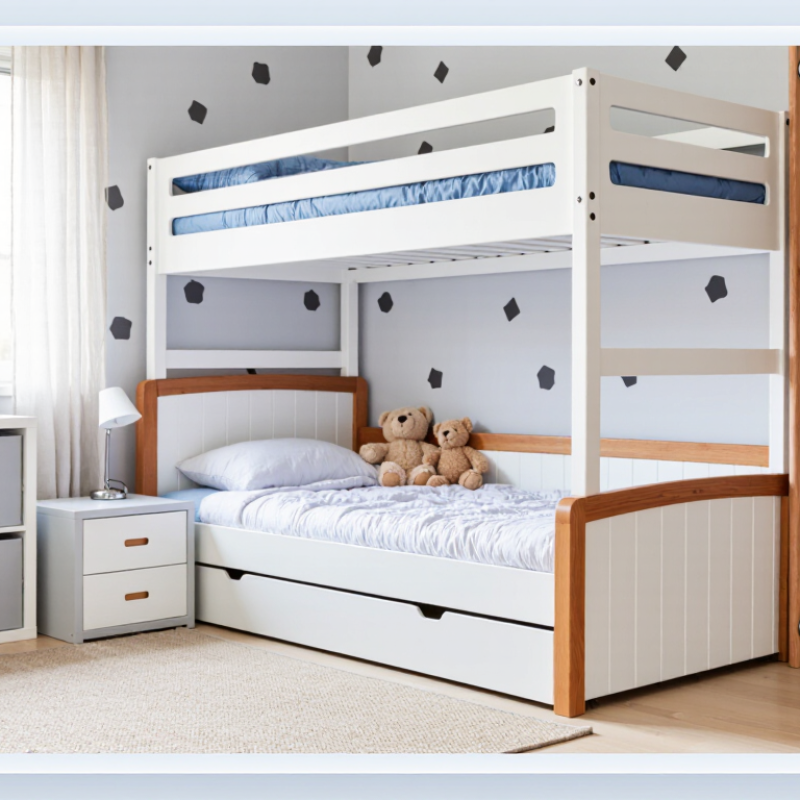
Understanding bed types is more useful than chasing one universal design. A toddler bed suits younger children who need low entry and nearby rails. A single bed offers longer use and easier bedding replacement. Bunk beds save floor space, especially in shared bedrooms. However, they need stable guardrails, secure ladders, and clear age guidance. Measure twice.

A loft bed creates space for a desk or storage underneath. It works well in compact urban homes, but ceiling height and fall protection require careful checks. A trundle bed helps visiting siblings without needing another full-time bed.

Floor beds can support independent access, though they may perform poorly in damp rooms without good ventilation. Warm, humid regions need breathable materials and easy-clean surfaces. Colder homes may prioritize enclosed storage for blankets.

Global buyers should review local safety requirements, mattress sizes, assembly instructions, and replacement-part access. Standards differ between markets, so supplier documentation must be specific rather than vague. During product evaluations, test wobble, sharp edges, joint strength, and ladder grip by hand. A small gap can become a real hazard. I would also inspect packaging for moisture damage after long-distance shipping. Not every attractive frame lasts equally well; appearance can hide weak connections. Ask for load limits, material details, and clear maintenance guidance before ordering.

Checking Safety Standards, Materials, and Age-Appropriate Features

How to Choose the Best Kids Bed for Global Buyers in 2026?

Safety should guide every bed decision, not attractive photos. The European Commission’s 2023 Safety Gate report recorded 3,412 product alerts across Europe, showing why buyers must inspect compliance evidence. For bunk beds, request testing against ASTM F1427 or EN 747, depending on the target market. Check guardrail height, ladder strength, mattress fit, and gaps that could trap fingers or limbs. A bed should not wobble when an adult applies firm pressure. It should not smell strongly of chemicals, either. Ask for material declarations, paint safety documents, and formaldehyde testing for composite wood. EPA TSCA Title VI and EU chemical requirements can help verify lower-emission materials.

Age changes the risk. Toddlers need low platforms, rounded edges, stable rails, and easy access without climbing. Older children may use lofts, but the manufacturer’s minimum age must be clear. The U.S. Consumer Product Safety Commission has repeatedly linked falls and entrapment risks with elevated sleeping products, so vague age guidance is a warning sign. Inspect the mattress base closely; gaps beside the frame should be minimal and consistent. Natural wood sounds reassuring, but unfinished edges can still cause splinters. I would not rely on “non-toxic” marketing without laboratory evidence. Even careful buyers can miss regional differences, such as metric mattress sizes or different testing labels. Clear instructions matter. So does realistic supervision.

Comparing Sizes, Designs, Storage Options, and Room Compatibility

Choosing the best kids bed starts with accurate measurements, not attractive pictures. Compare standard, twin, single, and extended sizes carefully. Mattress dimensions can differ between markets, even when names sound similar. Measure the child’s current mattress and leave enough floor space for dressing and play. A low bed suits younger children, while a raised design may work better for older kids. However, ladders need stable steps and comfortable hand clearance.

Design should match the room’s daily demands. A simple frame fits small rooms and makes cleaning easier. A bunk or loft bed saves floor space but can make the ceiling feel crowded. Storage drawers underneath are useful for bedding, toys, or seasonal clothes. Check drawer depth, wheel quality, and opening space. A drawer that hits a radiator becomes frustrating quickly. Open shelves offer easy access, but they can create visual clutter. I have found that attractive storage often holds less than expected.

Tips: Sketch the room before ordering. Mark the bed’s full footprint with masking tape. Test door swings, window access, and walking paths. Confirm mattress thickness and replacement availability with the seller. Check the assembly instructions before purchase. If the room is shared, measure personal space around the bed, not only the frame. Small design compromises may be necessary, and that is normal. A perfect bed on paper can still feel awkward in real life.

How to Choose the Best Kids Bed for Global Buyers in 2026? - Comparing Sizes, Designs, Storage Options, and Room Compatibility

Kids' Bed Comparison Guide for International Buyers
Bed Type Typical Mattress Size Approximate Outer Size Recommended Age / User Design Characteristics Storage Options Recommended Room Size Ceiling Height Consideration Key Advantages Important Buying Checks
Toddler Bed 70 × 140 cm
Approximately 27.5 × 55 in
Approximately 75 × 150 cm Usually suitable for children transitioning from a cot; age guidance depends on the product and local safety requirements. Low profile, short length, protective side rails, and easy access for young children. Usually limited; may include a small under-bed drawer or open shelf. Approximately 6–8 m² or larger. Works with standard ceiling heights because the frame is low. Easy for children to enter and leave; takes up less floor area than a full-size bed. Check rail height, maximum mattress thickness, rounded edges, stable construction, and compliance with the destination market's child-bed requirements.
Single / Twin Bed 90 × 190 cm or 90 × 200 cm
Approximately 35.4 × 75 or 78.7 in
Approximately 96–100 × 196–206 cm Suitable for school-age children, teenagers, and one adult, depending on the mattress load rating. Most versatile format; available as platform, panel, upholstered, or low-frame designs. Under-bed drawers, lift-up storage, open cubbies, or no storage. Approximately 7–10 m² or larger. No special ceiling requirement. Long service life, broad mattress availability, and easy placement in bedrooms of different layouts. Confirm whether the frame accepts 190 cm or 200 cm mattress length, and allow clearance for drawers, doors, and walking paths.
Small Single / Narrow Single 75 × 190 cm or 80 × 190 cm
Approximately 29.5–31.5 × 75 in
Approximately 81–90 × 196 cm Suitable for children and smaller bedrooms; capacity depends on the frame specification. Compact footprint with a simple platform or slim side rails. Usually one or two shallow drawers, or open space beneath the frame. Approximately 5–7 m² or larger. No special ceiling requirement. Useful for apartments, shared rooms, and narrow floor plans. Verify that replacement mattresses are readily available in the target country, as this size is less universal than a standard single.
Bunk Bed Usually 90 × 190 cm or 90 × 200 cm per sleeping level Approximately 100 × 200 cm footprint; height commonly 150–180 cm Designed for two children; the upper bunk should only be used when the child meets the applicable safety guidance. Two vertically arranged sleeping platforms connected by a ladder or steps. Under-bed drawers, stair compartments, shelves, or optional trundle storage. Approximately 8–10 m² or larger, with sufficient clearance around the ladder. Allow comfortable clearance above the top mattress; measure from the top of the mattress to the ceiling, not only from the frame. Saves floor space and supports shared bedrooms. Check guardrail coverage, ladder stability, mattress thickness limits, maximum load, anti-tip fittings, assembly instructions, and applicable bunk-bed standards.
Loft Bed Usually 90 × 190 cm or 90 × 200 cm Approximately 100 × 200 cm footprint; height commonly 160–190 cm Suitable for older children when the product's safety instructions permit elevated sleeping. Raised sleeping platform with usable space underneath for a desk, play area, wardrobe, or seating. Desk drawers, shelves, wardrobe modules, or open storage beneath the bed. Approximately 8–12 m² or larger. Requires careful ceiling measurement and enough headroom above the mattress and guardrail. Combines sleeping, studying, and storage functions in one vertical footprint. Check guardrail height, ladder access, anchoring method, ceiling clearance, ventilation, and whether the unit can be safely assembled in the room.
Trundle Bed Upper bed: commonly 90 × 190 cm or 90 × 200 cm
Lower trundle: commonly 80–90 × 180–190 cm
Approximately 100 × 200 cm closed; more floor space is needed when extended. Suitable for one child plus an occasional guest, subject to the lower bed's load rating. Standard-height bed with a pull-out second mattress platform. The lower sleeping platform doubles as concealed storage when not in use. Approximately 8–10 m², plus clearance equal to the trundle length. No special ceiling requirement. Provides an extra sleeping space without the height of a bunk or loft bed. Measure the full extension area, check wheel and locking quality, and confirm whether the lower mattress has a reduced height limit.
Storage Platform Bed Commonly 90 × 190 cm, 90 × 200 cm, or 100 × 200 cm Approximately 100–110 × 200–210 cm Suitable for school-age children, teenagers, and adults when the frame load rating is appropriate. Solid platform or slatted base with integrated drawers, cabinets, or lift-up compartments. High storage capacity, often with two to four drawers or a hydraulic lift-up base. Approximately 8–12 m², depending on drawer-opening direction. No special ceiling requirement. Reduces the need for separate wardrobes or storage units. Check ventilation beneath the mattress, drawer clearance, hardware durability, access to the lift-up mechanism, and total assembled weight.
House-Frame or Canopy Bed Commonly 90 × 190 cm or 90 × 200 cm Approximately 100–115 × 200–215 cm; height varies by roof or canopy design. Suitable for children when decorative elements do not create climbing, entanglement, or impact hazards. Decorative roof-shaped frame or canopy structure around a low or standard-height mattress. Usually open under-bed space; optional baskets, shelves, or low drawers. Approximately 8–10 m² or larger. Measure the highest frame point and leave adequate clearance from ceiling fixtures. Creates a themed bedroom feature without requiring a high sleeping platform. Check frame stability, anti-tip protection, fabric flammability where applicable, smooth finishes, and clearance from lamps or ceiling fans.
Floor Bed / Montessori-Style Bed Commonly 70 × 140 cm, 80 × 160 cm, or 90 × 190 cm Usually mattress size plus 5–15 cm around the frame. Often selected for young children; suitability depends on the child's development, supervision, and the product design. Very low frame that allows independent access and minimizes fall height. Normally minimal; may include low shelves, book pockets, or baskets nearby. Approximately 6–8 m² or larger. No special ceiling requirement. Low entry height, simple appearance, and easy access for children. Ensure the room is childproofed, maintain airflow around the mattress, prevent gaps between the mattress and frame, and follow local guidance for young children's sleep environments.

Note: Dimensions are typical market ranges and may vary by country, construction method, and product design. Buyers should verify the exact mattress size, assembled dimensions, maximum load, safety instructions, and applicable regulations for the destination market before purchase.

Evaluating Suppliers, Certifications, Costs, and Shipping Requirements

Global buyers should evaluate a kids bed as a safety product, not merely a low-cost piece of furniture. Ask suppliers for factory details, material specifications, inspection records, and a current production sample. A video call is useful, but it cannot replace an independent audit. Check joint strength, sharp edges, ladder stability, mattress fit, paint adhesion, and ventilation openings. Request test reports from competent laboratories, then confirm that the tested model matches the shipment. Certification names and requirements vary by destination. Some markets may require chemical, flammability, structural, or labeling evidence. Do not accept a logo alone. Ask for traceability.

Landed cost includes unit price, tooling, packaging, inland transport, freight, duties, taxes, storage, and inspection fees. A bed priced at 70 dollars can become 125 dollars after delivery and compliance costs. Use a written quotation with Incoterms, minimum order quantities, payment stages, warranty scope, and replacement terms. Compare at least three suppliers, but avoid choosing only the cheapest offer. Cheap cartons often create expensive damage. Do not guess. Keep records.

Shipping plans need carton dimensions, gross weight, container loading diagrams, and realistic lead times. For wooden pallets, verify destination marking and treatment requirements before booking. Confirm whether the bed arrives flat-packed, assembled, or partially assembled. That choice changes labor, damage risk, and warehouse space. Leave buffer. I would request a pre-shipment inspection with photographs of labels, hardware, and carton compression. The process is not flawless. Suppliers can misread a drawing, and buyers can overlook local rules. Record every revision in writing, even when the change seems minor.

How to Choose the Best Kids Bed for Global Buyers in 2026?

Shipping-readiness benchmark for supplier selection, certification planning, landed-cost analysis, and international delivery risk.

Supplier evaluation
Prioritize suppliers that can provide traceable materials, documented quality controls, export packing specifications, and consistent production records.
Certifications
Confirm the requirements of the destination market, such as EN 747, ASTM F1427, AS/NZS 4220, or BS 8509 where applicable. Test reports should match the final product configuration.
Cost and shipping
Compare product cost, packaging volume, freight mode, customs duties, taxes, insurance, and last-mile delivery rather than relying only on the factory price.

Benchmark data: World Bank Logistics Performance Index 2023 country scores. Higher scores generally indicate stronger logistics infrastructure, shipment reliability, customs efficiency, and delivery timeliness. Scores are a market-level reference and are not supplier ratings.

Building a Practical Buying Checklist for International Buyers

How to Choose the Best Kids Bed for Global Buyers in 2026?

Building a Practical Buying Checklist for International Buyers

A reliable kids’ bed checklist starts with the child’s room, not the product photo. Measure the floor area, doorway, stairwell, and mattress space. Measure twice. Check whether the bed leaves safe walking clearance and allows easy cleaning underneath. Solid construction matters, but weight also affects delivery, assembly, and future relocation. Ask for material details, load guidance, surface finishing information, and clear assembly instructions.

Tips: Request close-up photos of joints, edges, slats, and hardware. Confirm the mattress dimensions in centimeters and inches. Check packaging measurements before ordering. Ask whether replacement parts can be supplied internationally. Review destination-market safety requirements with a qualified local professional, because rules vary between countries. Keep every specification and conversation in writing.

For international buying, compare the complete landed cost rather than the listed price. Include shipping, taxes, customs handling, installation, and possible storage fees. A lower price can become expensive after delivery. Confirm production timelines and inspection procedures. Independent pre-shipment checks can reveal rough edges, missing screws, weak slats, or inaccurate dimensions. I once underestimated stair access on a furniture project; the bed fit the room but not the building. That mistake changed my checklist. Ask again. Children grow quickly, so consider adjustable features, repairability, and a design that remains useful for several years. Avoid assumptions about comfort or safety based only on attractive images.

Article Source:

Contact us

Let's Get Started!

Competitive Pricing and Exceptional Service!