How to Choose Acrylic Based UV Resin for Your Business?
Choosing Acrylic Based Uv Resin is a practical business decision, not just a search for the lowest price. The right grade should suit your product, equipment, and production targets. A resin that performs well in a thin coating may behave differently in a printed component or adhesive layer. Small details matter.
Start with the application. Check viscosity, cure requirements, adhesion, flexibility, and compatibility with your substrate. Confirm that your UV lamps match the resin’s specified wavelength and that the material cures adequately at your intended line speed. A datasheet is useful, but it cannot replace a controlled production trial. Test representative samples, including edges and thicker sections, where incomplete curing may be easier to miss.
Commercial factors matter too. Compare consistency between batches, packaging options, technical support, and reliable supply. Ask suppliers for current technical and safety documentation, then review handling and storage guidance with your team. Do not assume that one formulation will work across every product or machine. It may not. A lower purchase price can also mean extra rework if the resin creates tack, poor adhesion, or avoidable production delays.
This guide will help you compare options with clearer criteria and better questions for suppliers. Record test conditions and results, including cure settings and substrate preparation. There is no perfect resin for every business. The best choice is the one that meets your performance needs consistently, with costs and limitations understood before full-scale use.
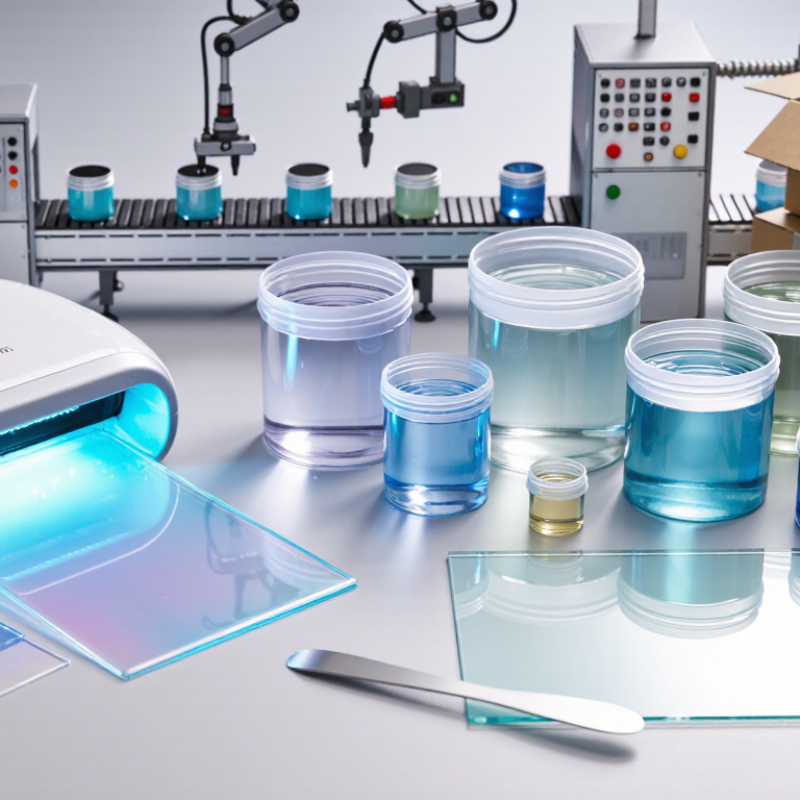
What Is Acrylic-Based UV Resin and How Is It Used?
Acrylic-based UV resin is a liquid formulation that typically combines acrylate oligomers, reactive diluents, and a photoinitiator. Under suitable ultraviolet light, the photoinitiator starts a rapid reaction that turns the liquid into a solid polymer. The cured layer can provide gloss, surface protection, or adhesion, depending on its formulation. Common uses include protective coatings, printing inks, adhesives, and some 3D-printing applications.
A small test can reveal a lot. Apply the resin to the actual substrate, then check adhesion, surface feel, and cure depth under the intended lamp. Pigments, thick layers, and shadowed areas may block light and leave material incompletely cured. Acrylic systems can also shrink during curing or become tacky when oxygen interferes with the surface reaction. Grand View Research estimated the global UV-curable resins market at about US$5.07 billion in 2023, with an expected 8.2% compound annual growth rate from 2024 to 2030. That estimate covers UV-curable resins broadly, not acrylic formulations alone. For a business, confirm the resin’s wavelength requirements, viscosity, and substrate compatibility before comparing cost per unit. One detail is easy to miss: fast curing does not guarantee reliable performance in every production setup.
Which Business Requirements Should Guide Resin Selection?
Start with the product, not the resin specification sheet. A coating for a flat label has different demands from a resin used in a molded part. Note the substrate, target film thickness, finish, and expected handling before comparing options. Small details matter.
Check that the resin cures with your equipment’s wavelength and light intensity. Test the actual layer thickness, since a surface that feels dry may hide incomplete curing underneath. Ask suppliers for technical data and safety documentation, then verify key claims with a small production-style trial. Throughput matters, but so do cleaning time and rejected units. Fast is not always efficient.
Set practical acceptance limits for color, hardness, adhesion, and tack. If the finished item needs a clear surface, inspect it under the lighting customers will use; minor haze can be easy to miss in a workshop. Track cure time and defect rates across several batches. A first trial can look excellent and still fail during routine production. No resin suits every process. Be ready to revise your assumptions when results differ from the sample sheet. Keep storage conditions and usable shelf life in the calculation, especially when demand fluctuates.
How Do Resin Properties Affect Product Performance?
Acrylic-based UV resin can look clear and glossy yet perform poorly if its properties do not suit the product. Viscosity affects how resin flows around fine details and levels across a surface. A high-viscosity formula may hold shape on a vertical edge, but trap bubbles in a narrow cavity. Cure speed matters too: insufficient light intensity or exposure can leave a tacky surface or a weak interior. Check shrinkage, hardness, flexibility, and yellowing resistance against the part’s actual use. A rigid coating may resist scratches, but crack when a flexible part bends. A clean datasheet can still mislead.
Grand View Research estimated the global UV-curable resins market at about USD 5.17 billion in 2023, with continued growth projected through 2030. This market figure signals commercial demand; it does not prove any resin will meet a specific performance target. Compare technical data under consistent test conditions, and verify results on the intended substrate. Record lamp type, distance, exposure time, and film thickness. Small process changes can alter cure quality. That detail is easy to overlook.
Tips: Request viscosity, hardness, and shrinkage data, then test a small sample using your production setup. Inspect the cured piece after cooling and again after repeated handling. If the surface looks good but the part fails later, revisit the test method—not just the resin choice.
How to Choose Acrylic-Based UV Resin for Your Business
How do resin properties affect product performance? Start by matching the resin’s photoinitiator to the curing lamp.
These are common nominal UV LED peak wavelengths, not a ranking of resin performance. Wavelength compatibility affects cure speed and depth; the best choice depends on the resin’s photoinitiator absorption, formulation, part thickness, and lamp intensity. Confirm cure, surface tack, and adhesion with the supplier’s technical data and your own tests.
How to Evaluate Suppliers and Verify Resin Quality?
When evaluating suppliers of acrylic-based UV resin, request a current technical data sheet, safety data sheet, and batch-specific certificate of analysis. Check viscosity, recommended lamp wavelength, cure time, hardness, adhesion, and yellowing resistance. Then test a sample using your own lamp and substrate. A resin that cures well on a clear test strip may remain tacky in a deep or pigmented part. Details matter.
Ask how the supplier controls batch variation and handles out-of-spec results. Compare at least three batches for viscosity and cure performance, and keep samples for later checks. An accredited laboratory can verify selected properties; confirm its test method and measurement conditions. Grand View Research’s 2024 UV-curable resins market report estimated the global market at about USD 5.6 billion in 2023 and projected roughly 7.5% annual growth through 2030. These are market estimates, not proof of resin quality. Forecasts vary by scope.
Request written tolerances, lead-time history, and change-notification practices. A small pilot run can reveal dispensing issues, surface tack, or weak adhesion before a larger order. Record lamp output and exposure time, too. That part is easy to overlook. If a supplier cannot provide traceable test results, pause and ask why; price alone is a poor substitute for evidence.
How to Match Resin Specifications to Your Production Process?
How to Choose Acrylic Based UV Resin for Your Business?
How to Match Resin Specifications to Your Production Process?
Start with the actual production conditions, not a resin’s headline cure time. Check the required UV wavelength against your lamp’s output, then consider distance, line speed, and exposure time. A resin that cures in seconds under a laboratory lamp may remain tacky on a fast-moving production line. Small details matter.
Viscosity should suit the dispensing method and part geometry. A thin resin can flow into narrow gaps, but may run off vertical surfaces. A thicker grade can hold its shape, though it may trap bubbles around fine features. Match the resin to the substrate, too: test adhesion on the actual plastic, glass, or coated surface, not just a convenient sample. Record film thickness and surface preparation, since both can change the result.
Check shrinkage, hardness, flexibility, and temperature limits against how the finished part will be used. If components are heat-sensitive, monitor their temperature during curing; lamp intensity and exposure can affect more than cure speed. Test the full process at realistic volumes before changing equipment settings. Test the real setup. I still find it easy to overvalue a fast cure and overlook handling or post-cure behavior. Keep a small batch record, including lamp settings and observed defects, so adjustments are based on repeatable evidence.