What Is the Best Rockwool Density in China?
Choosing the right Rockwool Density in China is not a matter of picking the heaviest board. Density, usually stated in kilograms per cubic metre, must suit the assembly, loading, and exposure. A roof, façade, and industrial pipe do not face the same demands. The stakes are real. The 2023 Global Status Report for Buildings and Construction, published by GlobalABC and UNEP, estimates that buildings and construction accounted for 34% of global energy demand and 37% of energy- and process-related carbon dioxide emissions in 2022. Insulation matters, but density alone cannot deliver energy savings.
A useful comparison begins with the specified application and verified product data. Check declared thermal conductivity, compressive or tensile strength where relevant, water absorption, dimensional stability, and fire classification. Then compare those values against the project requirements and applicable Chinese product standards. The International Energy Agency’s buildings analysis also underscores the sector’s role in improving energy performance; it does not prescribe one ideal rockwool density. That distinction matters. Higher density may improve resistance to mechanical loads, yet it does not automatically mean better thermal insulation or lower lifetime cost. Product formulation and installation quality matter too.
This guide examines practical density ranges and the trade-offs behind them, from lightweight cavity insulation to load-bearing roof boards. Ask suppliers for current test reports tied to the exact product, not just a catalogue figure. Site conditions can change the answer. And honestly, published specifications may not reveal every installation weakness; a careful design review remains essential.
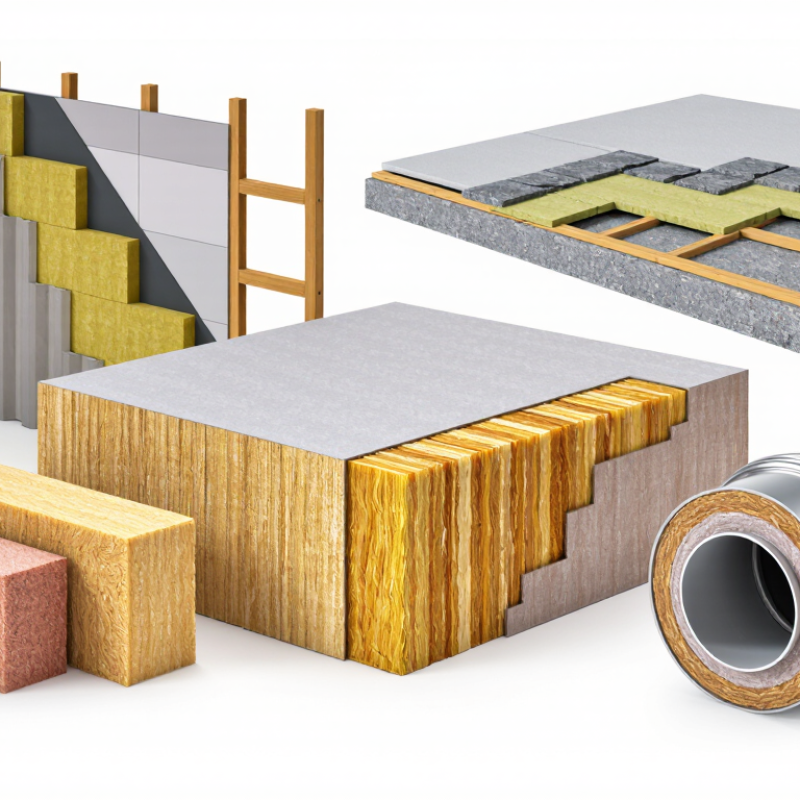
Define Rockwool Density and Common Chinese Product Ranges of 60–200 kg/m³
What Is the Best Rockwool Density in China?
Rockwool density is the mass of material per unit volume, measured in kilograms per cubic metre (kg/m³). Chinese product schedules commonly list densities from 60 to 200 kg/m³. Density influences stiffness and load resistance, but it does not alone determine insulation performance. Fibre orientation, thickness, binder content, and installation also matter. China’s GB/T 11835-2016 and GB/T 19686-2015 provide relevant product and testing references.
Around 60–100 kg/m³ is common for lighter insulation boards and blankets where low weight matters. Products near 100–140 kg/m³ may suit applications needing greater rigidity, while 140–200 kg/m³ products are often selected for higher mechanical demands. These ranges are indicative, not universal categories. Check the product’s declared thermal conductivity, compressive strength, and intended use; compare values tested under equivalent conditions. A denser board is not automatically the better insulator.
Tips: Match density to the load and installation, then verify the datasheet and applicable GB/T test results. One useful check: inspect cut edges for uniform fibres and ask how the stated density was measured. Density alone can mislead.
What Is the Best Rockwool Density in China? — Definition and Common Product Ranges of 60–200 kg/m³
| Product or Application | Typical Density Range | Common Nominal Density Examples | Practical Selection Considerations |
| Lightweight acoustic and cavity insulation boards | 60–100 kg/m³ | 60, 80, 100 kg/m³ | Often selected for sound absorption in cavities and partitions. Confirm the required thickness, airflow resistance, fire performance, and installation method. |
| Building insulation boards for walls and roofs | 80–160 kg/m³ | 80, 100, 120, 140, 160 kg/m³ | Choose a product designed for the specific wall or roof system. Wind load, fixing method, compressive behavior, and system requirements matter in addition to density. |
| Insulation for metal-faced sandwich panels | 80–120 kg/m³ | 80, 100, 120 kg/m³ | Use the panel manufacturer’s specified core grade. Bonding, fiber orientation, panel construction, and fire-test requirements can affect suitability. |
| Industrial pipe and equipment insulation | 80–160 kg/m³ | 80, 100, 120, 150 kg/m³ | Selection depends on operating temperature, pipe diameter, insulation thickness, cladding, and mechanical exposure. Check the product’s stated temperature limits. |
| Higher-load or mechanically exposed insulation applications | 140–200 kg/m³ | 140, 160, 180, 200 kg/m³ | Higher-density products may be considered where greater rigidity or resistance to handling loads is needed. Verify compressive strength and the project specification rather than relying on density alone. |
| Rockwool density definition | Density is the mass of the product divided by its volume, usually expressed in kilograms per cubic metre (kg/m³). It is a product characteristic, not a stand-alone measure of thermal, acoustic, fire, or mechanical performance. |
How to choose: There is no single best rockwool density for every project. The ranges above are indicative examples of commonly encountered product grades in China, not fixed national requirements or a guarantee that every manufacturer offers each grade. Confirm the application-specific standard, declared performance, dimensions, and test documentation before specifying a product.
Compare 80–120 kg/m³ Boards for Sandwich Panels with Higher-Density Facade Boards
For Chinese sandwich panels, 80–120 kg/m³ is a practical starting range, not a universal specification. The lighter end can suit roof or wall panels with modest loads; the denser end may better resist handling and compression. Check the core’s declared compressive strength, tensile strength perpendicular to the face, and thermal conductivity—not density alone. EN 14509 addresses factory-made sandwich panels, while EN 13162 covers mineral-wool insulation products. Match the product documentation to the panel assembly and intended use.
Facade boards often fall around 120–160 kg/m³, where greater rigidity can help with wind loads, fixings, and installation. But a heavier board is not automatically better: fastening design, substrate, and tested system performance matter. The IEA’s 2023 buildings analysis attributes about 30% of global final energy use to buildings, underlining why insulation performance deserves careful checking. Small detail. Request declared conductivity and relevant test results for the specified product; compare them at the same temperature conditions. Density alone is an imperfect shortcut, and I would not treat these ranges as code limits. On a project, confirm the required density and strength with the designer and applicable Chinese specifications.
Relate Density to Thermal Conductivity, Fire Performance, and Acoustic Absorption
Choosing rockwool density in China starts with the job, not a single “best” number. Density affects handling and stiffness, but it does not predict performance by itself. Not by itself. Thermal conductivity also depends on product structure, thickness, temperature, and installation. A denser board may suit a wall needing rigidity, while a lighter blanket can fit around pipes and framing. Compare tested conductivity values at the intended thickness, rather than assuming heavier always means warmer.
For fire performance, mineral fibres are generally resistant to high temperatures, but the whole assembly matters. Facings, binders, joints, and supports can change how a wall or ceiling performs. Check the product’s test data and the applicable project specifications in China. Small gaps matter. Even a well-chosen insulation layer can underperform when seams are left open or compressed unevenly.
Acoustic absorption is similarly specific. Density can influence airflow through the fibres, yet absorption also depends on thickness, mounting depth, and sound frequency. A thicker panel with an air gap may absorb low-frequency noise better than a denser, thin panel. Ask for frequency-band test results, especially if the space has machinery or echoing hard surfaces. I would avoid selecting by density alone; it is an easy shortcut, but not always a reliable one. Compare verified data for the exact product and installation.
What Is the Best Rockwool Density in China?
Density is only one selection factor. Compare thermal conductivity, fire classification, and acoustic performance against the intended application and the specific product datasheet.
How to read the chart: The overlapping indicative conductivity range shows why density alone does not reliably predict thermal performance. Check the declared value for the exact product and thickness.
- Thermal: Mineral wool products commonly declare thermal conductivity in the approximate range of 0.034–0.045 W/(m·K); the exact value varies by product.
- Fire: Many stone wool products achieve Euroclass A1, but classification applies to the tested product and configuration—verify its certificate.
- Acoustics: Absorption depends strongly on thickness, mounting, facing, and frequency. Higher density alone does not guarantee better absorption.
Indicative comparison only; not a substitute for product-specific test data or project requirements.
Check Compressive Strength and Design Loads Before Selecting 120–160 kg/m³ Insulation
For rockwool in China, density alone cannot confirm suitability. A 120–160 kg/m³ board may resist different loads depending on fiber orientation, binder, thickness, and production quality. Check the manufacturer’s declared compressive strength, not just the density. EN 13162 covers mineral-wool insulation products, while EN 826 specifies a test method for compressive behavior. Ask for the tested value, often reported as CS(10), in kilopascals. That figure describes stress at 10% deformation; it is not automatically a safe design load.
Calculate the load on the insulation, including equipment, finishes, and expected maintenance traffic, then compare it with the product data and the project’s safety factors. For scale, a 100 mm board at 120–160 kg/m³ weighs about 0.12–0.16 kPa under gravity. Small, but not zero. A roof or equipment platform may impose far greater pressure at feet or supports than across its full area. Check those contact points and long-term deformation, too. A datasheet can look reassuring. It may still leave a gap: confirm the exact grade, thickness, test result, and loading conditions with the project engineer before specifying the board.
Verify Product Test Data and Compliance with China’s GB/T 19686-2015 Standard
When comparing rockwool density in China, do not treat a single density figure as proof of product quality. Check whether the product category and intended use fall within GB/T 19686-2015. Then review the test report against the standard’s applicable requirements. Density alone is not proof.
A useful report should identify the tested product, sample details, test methods, results, and testing organization. Match its product description and declared density to the quotation, packaging, and batch documents. Check relevant properties such as dimensions, thermal conductivity, water absorption, and mechanical performance where applicable. Confirm that the report is current and traceable to the material being purchased; a report for a similar product may not represent the delivered batch. Small details matter.
Ask the supplier to explain any differences between the report and the product label, rather than accepting a general statement of compliance. Verify the testing organization’s qualifications and the report’s authenticity through appropriate records. A tidy certificate can still leave questions. Even experienced buyers can overlook a changed thickness or a substituted sample. Density helps with selection, but reliable decisions depend on product-specific test data and clear evidence of compliance.