How to Choose the Best Feather Flags for Your Business?
Choosing the right Feather Flags can change how quickly customers notice your business. A flag beside a busy sidewalk must work within seconds. Its shape, height, fabric, printing quality, and movement all influence that first impression. A beautiful design may still fail if drivers cannot read it from a distance. Visibility matters more than decoration.
Signage consultant Peter J. O’Connor explains, “The best flag is not the loudest; it is the clearest from the customer’s viewpoint.” That principle deserves attention. Before ordering, consider where the flag will stand, how far people will see it, and whether wind or nearby buildings will affect its movement. A retail entrance may need a tall teardrop flag, while a market stall might benefit from a compact sail shape. Measure the space carefully. Guesswork gets expensive.
Material choice also affects performance. Polyester usually offers strong color impact and flexible movement, while reinforced stitching can improve durability during repeated outdoor use. However, no Feather Flags product lasts forever. Sunlight fades printed colors, harsh weather weakens fabric, and poor storage can damage the pole. I have seen businesses focus heavily on graphics and overlook the base. That is an easy mistake. A stable cross base, water weight, or ground spike should match the surface and local conditions. This guide will help you compare designs, materials, sizes, bases, and maintenance needs before making a practical purchase. The goal is simple: attract attention without creating visual clutter.
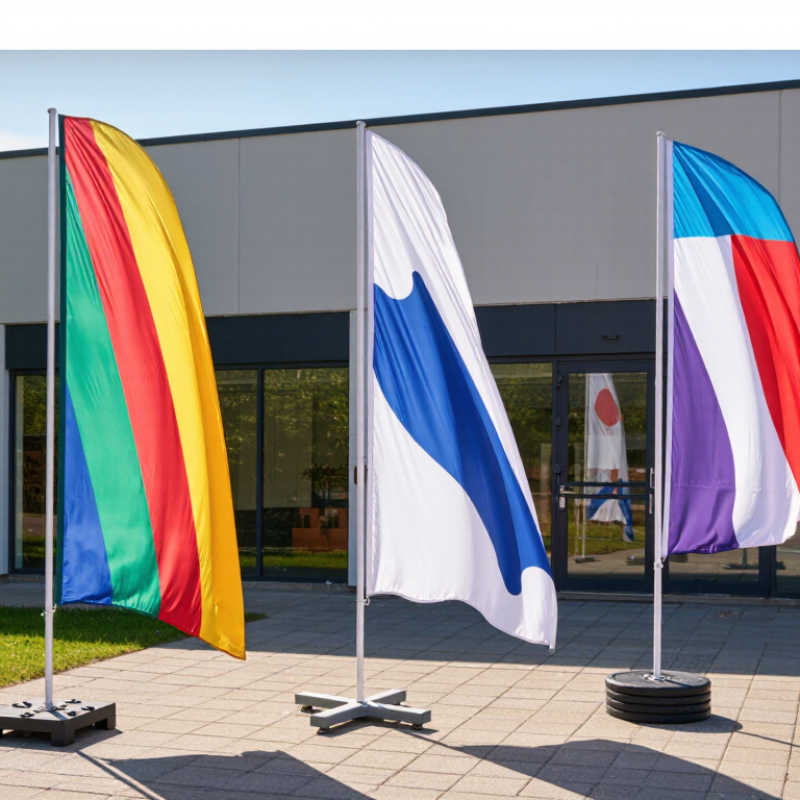
Define Your Business Goals and Flag Display Needs
How to Choose the Best Feather Flags for Your Business?
Start with a clear business goal. Do you need more walk-ins, event attention, or directional guidance? Each goal requires a different flag size, shape, and message. A roadside location may need a tall flag with large lettering. A crowded trade show may need a compact design with stronger contrast. According to the Out of Home Advertising Association of America, U.S. out-of-home advertising revenue reached $9.1 billion in 2023. This shows that physical visibility still deserves serious planning. However, a flag alone cannot fix weak positioning or an unclear offer.
Study your display environment before ordering. Measure the entrance, check wind exposure, and note where people naturally look. A single flag may work beside a narrow doorway. Several spaced flags can create a visible path across a parking area. Use short wording, readable from a distance. The Sign Research Foundation emphasizes legibility, contrast, and viewing distance in effective sign design. That principle applies here too. I have seen businesses choose attractive flags that disappear against trees, signs, or busy backgrounds. Good design is not always good placement.
Tips: Match flag height to viewing distance. Use one message per flag. Test visibility at morning and afternoon angles. Record foot traffic before and after installation. The result may not be perfect. Weather, crowds, and seasonal changes can distort your numbers. Review the evidence, then adjust the display.
Compare Feather Flag Shapes, Sizes, and Materials
Choosing the best feather flag starts with the display area, not the artwork. A teardrop shape holds its message firmly in moderate wind, while a traditional feather shape creates a taller, more dynamic edge. Straight flags offer cleaner text placement, but they can look less distinctive. OAAA’s 2023 annual revenue report recorded more than 9 billion dollars in U.S. out-of-home advertising, showing how physical visibility still supports local marketing.
Size changes both readability and stability. An 8-foot flag suits a storefront entrance. A 12- to 15-foot flag works better beside roads or parking areas. Larger flags need stronger ground hardware and more clearance. Lightweight polyester, often around 110–120 gsm, dries quickly and travels easily. Heavier fabric may resist creasing, although it can reduce movement. That trade-off is easy to overlook. Color can also fade faster in constant sunlight, especially on low-quality fabric.
Tips: Check viewing distance before choosing a size. Keep key words near eye level. Ask for UV-resistant polyester and reinforced stitching. Select a cross base for hard surfaces, or a ground spike for soil. The Outdoor Advertising Association of America reports that roadside visibility remains a major part of out-of-home advertising performance, but a flag cannot fix an unclear message. Test one sample outdoors for a week. Wind, shadows, and dirt often reveal problems that digital previews hide.
Evaluate Printing Quality, Colors, and Brand Visibility
When choosing feather flags, inspect the printed surface before admiring the shape. A sharp design should keep letters clean at arm’s length. Check the hem, pole sleeve, and double-sided bleed. Small defects become loud outdoors.
Color controls brand visibility. Choose strong contrast between the background and message. Dark lettering on a pale field often reads faster than similar-toned colors. The Arbitron and Outdoor Advertising Association of America On-Target Report found that 71% of Americans noticed billboard advertising. Feather flags compete in the same visual environment, but they move constantly. Avoid thin fonts, crowded layouts, and too many color changes. Bright colors can attract attention, yet excessive saturation may weaken legibility in direct sunlight. A perfect screen preview can still mislead. Request a physical proof whenever possible.
Printing quality also affects perceived reliability. The Sign Research Foundation’s Economic Value of On-Premise Signage report found that 60% of surveyed businesses reported sales increases after installing new signs. The average reported lift was 10%. These figures concern permanent signs, not feather flags, so they should guide judgment rather than promise results. Look for even ink coverage, accurate color matching, and fabric that resists visible fading. Ask how colors are measured and whether production follows recognized color-control practices, such as ISO 12647 principles. I would also test one flag at the actual entrance. Wind, shade, and passing distance can expose choices that looked acceptable indoors.
Choose the Right Base for Your Display Location
Choosing a feather flag starts with the ground beneath it. The right base keeps graphics visible and prevents avoidable tipping. A soft lawn usually suits a ground stake. Push it deep into firm soil, away from irrigation lines and buried cables. For loose soil, add wider support or choose a filled base. I have seen attractive displays lean after one rainy afternoon.
Hard surfaces need another solution. A cross base works on concrete, tile, or indoor floors, but it needs weight. Water-filled bases are portable and easy to store. Sand-filled options often feel steadier near busy entrances. On windy sites, use a heavy plate or a base designed for stronger conditions. Check the pole fit, base weight rating, and flag height together. A tall flag on a light base can look fine during setup, then become a hazard.
Think about movement around the display. Leave clear space for shoppers, carts, and maintenance equipment. Place the base away from doors and common trip points. Recheck bolts, seams, and pole connections each morning. I sometimes overestimate how stable a base feels indoors. That mistake is easy to repeat. Weather, foot traffic, and uneven surfaces change the answer. Test the setup for several minutes before opening, then adjust the base if it shifts.
Set a Budget and Select a Reliable Supplier
How to Choose the Best Feather Flags for Your Business?
Set a Budget and Select a Reliable Supplier
Start with a budget that includes printing, poles, bases, delivery, and replacement parts. A low quote can hide weak stitching or an unstable base. I have seen attractive flags lose shape after several windy events. That mistake is expensive.
Use the Advertising Specialty Institute’s 2023 Ad Impressions Study as a useful benchmark. It reported that promotional products can generate thousands of monthly impressions, depending on placement and product type. Feather flags benefit from similar repeated visibility near entrances, roads, and event lines. However, the report does not measure feather flags directly. Treat it as guidance, not proof.
Request a written quotation with fabric weight, print method, finished height, warranty terms, and production time. Ask whether the supplier provides wind-rated bases for grass, concrete, or indoor floors. A reliable supplier should send a digital proof and explain color limitations before payment. Check recent customer feedback, especially comments about fading and broken poles. Do not judge quality from photographs alone. The cheapest option may be sensible for one weekend, but not for a seasonal campaign. I might still choose it for a short test, then measure visibility, damage, and replacement costs before ordering more.
How to Choose the Best Feather Flags for Your Business?
Set a budget and compare suppliers using practical purchasing priorities.
A practical supplier scorecard should give the greatest weight to material durability, print quality, and hardware stability because these factors directly affect outdoor visibility and replacement costs. Lead time and warranty support are also important when planning promotional campaigns. Use this framework to compare quotations while keeping the total purchase within your approved budget.