Contact Us
STATEN ISLAND FIBERAMA

Shower Glass is more than a clear panel separating water from the rest of your bathroom. It affects safety, privacy, cleaning, light, and the room’s visual balance. A bright, frameless enclosure can make a compact bathroom feel larger. However, the wrong glass may reveal water spots, fingerprints, or an awkward door swing every day.
In practical bathroom planning, the best choice depends on several details. Tempered glass is widely used because it is processed for increased strength and safer breakage. Laminated options may provide additional protection, depending on local requirements and the installation design. Clear, low-iron, frosted, rain-textured, and patterned glass each create different experiences. Clear glass shows more buildup. Textured glass hides some marks. It can also reduce natural light.
Thickness alone does not determine quality. Hardware, edge treatment, panel support, accurate measurements, and professional installation matter just as much. A qualified installer should check wall conditions, floor level, door clearance, and applicable building standards before ordering the glass. Small errors can cause leaks or stressful adjustments later.
Details matter most.
Cleaning habits should guide the finish. If you rarely squeegee the enclosure, heavily textured surfaces may become difficult to maintain. If privacy matters, partially frosted glass may offer a better compromise than fully transparent panels. There is no universal winner. Even careful planning can miss personal preferences, especially after installation. This guide explains the main Shower Glass types and the practical questions that help you choose with greater confidence.
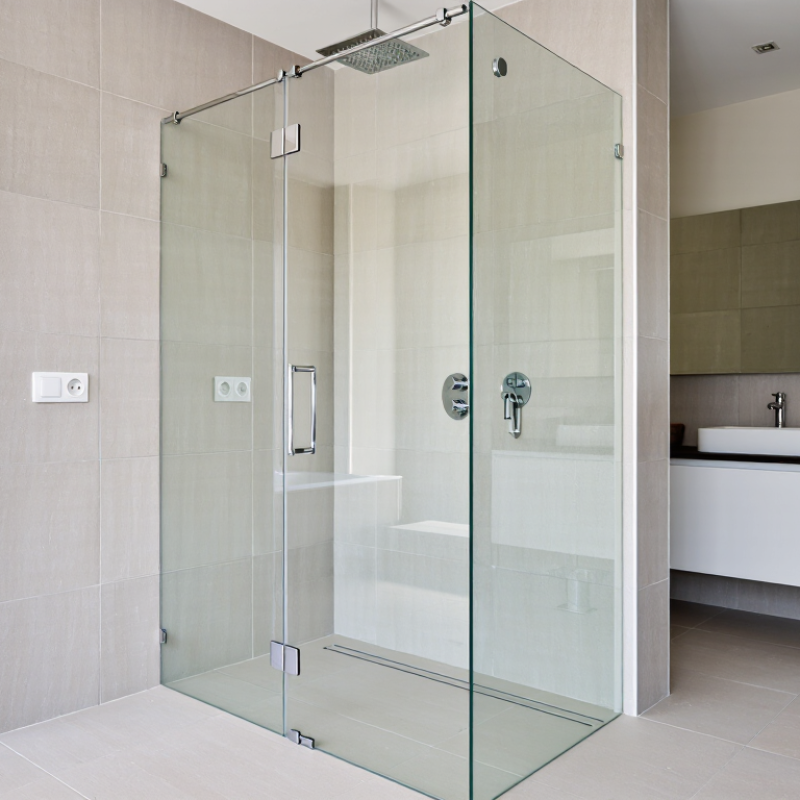
Shower glass is a safety-glazing panel used to contain water while keeping the bathroom visually open. It usually works as a fixed screen, hinged door, or sliding enclosure. The glass blocks splashes, while seals, channels, and hinges control movement and leakage. Small gaps are intentional. They allow expansion and prevent pressure on the panel.
Most shower panels use tempered glass. U.S. Consumer Product Safety Commission guidance states that tempered glass is about four times stronger than ordinary annealed glass. When damaged, it breaks into small granular pieces instead of long, sharp shards. The National Glass Association also identifies heat-treated safety glass as suitable for areas where human impact is possible. However, “safer” does not mean unbreakable. A hard strike near an edge can still cause failure.
Thickness affects stiffness, not just appearance. Six-millimeter glass may suit some framed systems, while eight- or ten-millimeter panels often feel more stable in frameless installations. The final choice depends on panel size, hardware, wall strength, and local safety requirements. Clear glass provides the most open look, but textured glass offers more privacy and hides water marks. Protective coatings can slow mineral buildup. They cannot cancel cleaning. In real bathrooms, poor alignment often causes more trouble than the glass itself. A qualified installer should verify measurements, edge protection, door swing, and support before installation.
| Glass Type | How It Works | Typical Thickness | Safety Characteristics | Privacy Level | Light Transmission | Maintenance | Best Use |
|---|---|---|---|---|---|---|---|
| Clear Tempered Glass | Uses a transparent, heat-treated panel to separate the shower area while allowing unobstructed views. | 6–10 mm | Tempered glass is stronger than ordinary annealed glass and breaks into smaller, less sharp pieces when shattered. | Low | Approximately 80–90% | Easy to clean, although water spots and soap residue are highly visible. | Bright bathrooms, frameless enclosures, and spaces that benefit from a visually open design. |
| Low-Iron Clear Glass | Reduces the green tint normally visible in standard clear glass, producing a cleaner and more neutral appearance. | 6–10 mm | Usually manufactured as safety-tempered glass for shower applications. | Low | Approximately 90% or higher, depending on thickness and surface treatment | Similar to clear glass; mineral deposits may be more noticeable because of its very clear appearance. | Minimalist bathrooms where accurate tile and hardware colors are important. |
| Frosted Glass | Uses a chemically etched, sandblasted, or permanently textured surface to scatter light and obscure outlines. | 6–10 mm | Can be safety-tempered; the frosting itself does not determine impact strength. | Medium to high | Approximately 55–75% | Textured areas can hold residue and may require gentle, regular cleaning. | Bathrooms where privacy is more important than a fully transparent enclosure. |
| Patterned or Textured Glass | Uses a raised or patterned surface to distort visibility while admitting natural or artificial light. | 6–8 mm | Safety performance depends on whether the panel is tempered or laminated and on local building requirements. | Medium to high | Approximately 50–80%, depending on the pattern | More difficult to clean than smooth glass because texture can collect soap and mineral deposits. | Decorative shower screens and designs requiring visual separation. |
| Tinted Glass | Uses color throughout the glass to reduce glare and create a darker, more private visual effect. | 6–10 mm | Must be specified as safety glass for shower use; color alone does not make glass safer. | Medium | Approximately 35–75%, depending on tint color and depth | Generally smooth and easy to clean; water marks may contrast with darker colors. | Contemporary bathrooms, glare reduction, and coordinated interior color schemes. |
| Laminated Glass | Combines two glass layers with a plastic interlayer that helps hold fragments together if the glass breaks. | Typically 6–10 mm total, depending on construction | Provides post-breakage fragment retention; the exact safety classification should be confirmed for the intended installation. | Low to high, depending on the interlayer and surface design | Approximately 70–90%, depending on glass and interlayer selection | Requires care around exposed edges and seals; smooth surfaces are relatively easy to maintain. | Projects prioritizing fragment retention, acoustic control, or specialized privacy effects. |
| Rain or Water-Effect Glass | Uses vertical or irregular texture to diffuse shapes and create a flowing visual effect while allowing light through. | 6–8 mm | Should be safety-tempered or otherwise approved for shower use according to local requirements. | Medium to high | Approximately 60–80% | Texture can make wiping more demanding, especially in hard-water areas. | Privacy-focused shower doors and decorative bathroom partitions. |
Selection tip: For most shower enclosures, choose safety glass that complies with applicable local building codes. Consider privacy, available light, glass thickness, hardware compatibility, cleaning effort, and the enclosure size before making a final decision.