What Is a PVDF Air Dome Used For?

A Pvdf Air Dome is an air-supported enclosure used to create large, covered spaces without conventional columns across the floor. Common applications include sports halls, tennis courts, swimming pools, warehouses, and temporary event venues. Picture a clear-span court beneath a fabric roof, with fans maintaining indoor pressure and entrance doors helping limit air loss. The exact design depends on span, climate, occupancy, and intended use.

“PVDF” usually refers to a fluoropolymer coating applied to architectural membrane fabric; it is not the dome’s entire structure. The membrane, seams, anchoring, blowers, controls, backup power, and access systems all matter. PVDF-coated fabrics are selected for properties such as weather resistance, but performance varies by product and installation. Ask for documented material specifications and project-specific engineering, not just a coating label. Details matter.

Energy use deserves scrutiny. The 2023 Global Status Report for Buildings and Construction, published by the United Nations Environment Programme and Global Alliance for Buildings and Construction, reported that buildings used 34% of global energy in 2022 and produced 37% of energy- and process-related CO₂ emissions. That figure is not specific to air domes. It does, however, make heating, cooling, lighting, and fan operation important questions when comparing facilities. A dome may offer a practical way to cover a wide area, but it is not automatically the lower-energy choice. Climate, insulation, operating hours, and maintenance can change the result. Even a small air leak can matter. The useful question is not simply what a Pvdf Air Dome is, but whether its design fits the site and its real operating needs.
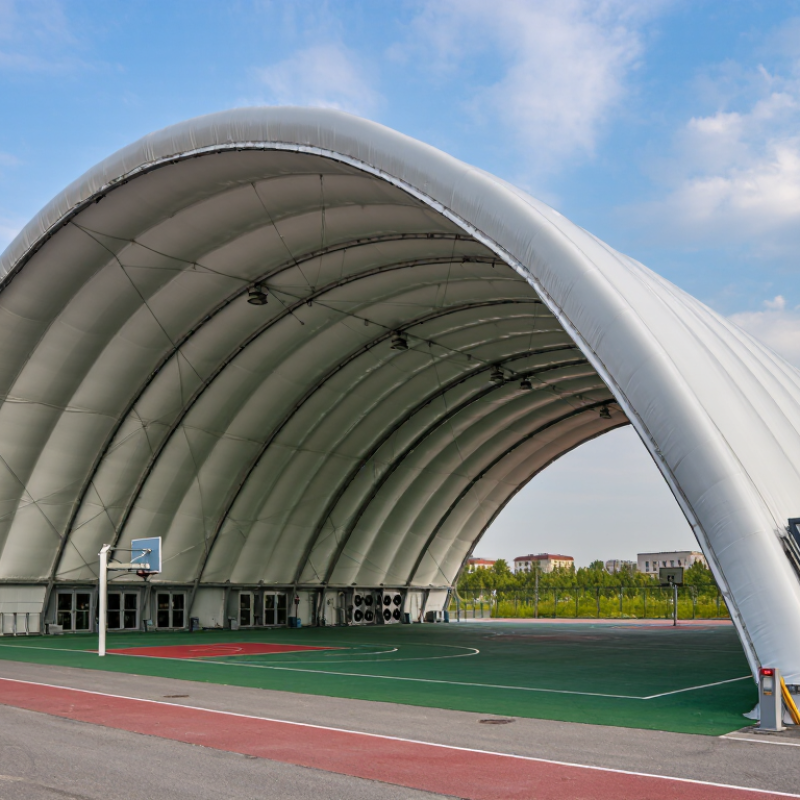
What Is a PVDF Air Dome Used For?

What Defines a PVDF Air Dome?

A PVDF air dome is an air-supported enclosure covered by a flexible membrane with a PVDF coating. The coating is not the structure’s support system. Slightly pressurized air keeps the membrane raised, while anchors and perimeter cables help resist wind forces. That distinction is easy to miss.

The membrane typically combines a durable fabric base with protective surface layers. PVDF can help resist ultraviolet exposure, moisture, dirt, and some chemical contact, but performance depends on the full material specification and local conditions. It is not a guarantee against damage. Seams, edge details, and installation quality matter too.

Inside, ventilation equipment maintains pressure and manages air quality. Entry vestibules reduce pressure loss when people come and go. Sensors can alert operators to pressure changes, while backup equipment helps maintain operation during a power interruption. Regular checks are practical: inspect seams, anchors, blowers, and membrane tension. An air dome may cover sports courts, pools, storage areas, or temporary workspaces. Its suitability depends on span, weather, use, and maintenance—not the PVDF coating alone. That part deserves a closer look.

How Does a PVDF Air Dome Stay Inflated?

A PVDF air dome stays inflated through continuous, controlled airflow, not through the coating itself. Fans push outdoor air inside, creating slight positive pressure against the flexible membrane. That pressure holds the roof in shape and helps resist wind loads. Industry engineering guidance commonly places operating pressure around 0.5–1.5 inches of water gauge, roughly 125–375 pascals; the correct setpoint depends on the dome’s design and openings.

A modest pressure. Still structural.

Pressure sensors monitor the interior, and control systems adjust fan output as doors open or weather changes. Entry vestibules reduce air loss when people move in and out. Backup fans or power systems help maintain pressure if primary equipment fails. The 2021 International Building Code, Section 3102, addresses air-supported structures and their operating systems; ASCE/SEI 55-16 provides design guidance for membrane structures. Operators should also inspect seals, fan belts, and sensor readings regularly.

A gauge can look normal while a worn door seal quietly wastes airflow. That detail is easy to miss.

Which Facilities Commonly Use PVDF Air Domes?

PVDF air domes are commonly used where a wide, column-free indoor area is useful. Sports facilities are a familiar example: soccer training centers, tennis courts, and community recreation spaces can operate through cold or wet seasons. Players have room to move, while staff can adjust lighting and ventilation for different activities. The floor still matters.

Swimming pools also use air-supported domes, but humid air needs careful management. Dehumidification, corrosion-resistant fittings, and regular inspections help protect the structure and pool equipment. A dome may look simple from outside. Its indoor climate is not.

Other common settings include exhibition venues, temporary event spaces, and storage facilities for goods that need shelter from weather. Some agricultural operations use domes for equipment or produce, depending on local conditions and the required environment. These uses are not interchangeable. A sports dome needs different access, lighting, and safety planning than a storage building.

Before choosing a facility type, operators should consider wind and snow loads, site drainage, entry systems, backup power, and emergency exits. Air pressure must be maintained by suitable equipment, so operating plans matter as much as the fabric. A site assessment can reveal awkward constraints, such as limited space for airlocks. That detail is easy to miss.

How Are PVDF Air Domes Adapted to Different Activities?

What Is a PVDF Air Dome Used For?

How Are PVDF Air Domes Adapted to Different Activities?

A PVDF air dome can be configured around the way people use the space, rather than treated as a one-size-fits-all hall. For indoor sports, designers may allow clear floor spans, add sport-specific lighting, and plan ventilation around active users. A court also needs durable flooring and enough clearance for balls, equipment, and safe movement. Small details matter.

For exhibitions or community events, the layout may include wider entrances, flexible partitions, and lighting suited to displays or presentations. Storage areas and service access can help crews move equipment without crossing public routes. If the dome hosts changing activities, movable fittings offer flexibility, though they can make setup more demanding. That trade-off is easy to overlook.

Climate and site conditions shape the design, too. Insulation, heating or cooling, and air circulation should match local weather and expected occupancy. Door placement affects how air enters and leaves, while frequent openings may challenge pressure stability. The membrane and supporting systems need appropriate inspection and maintenance for the site’s conditions. No configuration fits every activity; careful planning should start with the real schedule, equipment, and user needs.

What Factors Determine Where They Are Suitable?

A PVDF air dome is a fabric-covered structure kept upright by controlled internal air pressure. It can shelter sports courts, pools, event areas, or temporary workspaces. Its suitability depends less on appearance than on the site and daily demands.

Start with local weather. Wind, snow, temperature swings, and sun exposure affect membrane selection, anchoring, and operating requirements. A qualified design team should assess site conditions rather than rely on a generic span or load figure. Ground shape matters, too. Uneven soil, drainage problems, or limited access can complicate installation. Not everywhere.

The intended use also changes the decision: a busy sports facility may need clear interior space, reliable entry systems, lighting, ventilation, and comfortable temperatures. A storage dome may have simpler interior needs, but still requires suitable access and moisture control.

Consider ongoing operations before choosing a location. Fans need dependable power, and staff need a plan for inspections, repairs, and severe-weather procedures. Nearby homes may be affected by fan noise, while users may notice pressure changes when doors open. That detail is easy to overlook. A dome can seem ideal on a drawing, yet feel awkward once people, equipment, and daily routines fill the space. The best fit is the site where structural demands, climate, access, operating costs, and user comfort can all be managed realistically.

Contact us

Let's Get Started!

Competitive Pricing and Exceptional Service!