Contact Us
STATEN ISLAND FIBERAMA

Choosing the right bedroom door lock involves more than comparing finishes or prices. A suitable Bedroom Door Lock should match your privacy needs, door thickness, household routines, and emergency access plans. Some buyers prefer a simple privacy knob, while others need a keyed entry lock, smart lock, or sliding door solution. Each type solves a different problem. However, convenience can sometimes weaken security.
This guide examines ten common bedroom door lock types from a practical buyer’s perspective. It considers installation difficulty, durability, noise, maintenance, and daily usability. A lock should turn smoothly, latch firmly, and remain reliable after repeated use. Smart models may offer entry logs and temporary codes, but batteries can fail at inconvenient times. Mechanical locks avoid that issue, although they may provide fewer features. No lock is perfect. That matters.
Material quality also deserves close attention. Solid metal components usually feel stronger than thin decorative parts. The strike plate should sit securely in the frame, not merely look attractive. Before buying, measure the backset, door thickness, and existing borehole. Small measurement errors can make installation frustrating. Manufacturer instructions and independent testing provide useful evidence, but real homes create unexpected conditions. Humidity, children, pets, and frequent guests can expose weaknesses quickly. The best choice balances privacy, reliability, accessibility, and budget without exaggerating what any lock can provide.
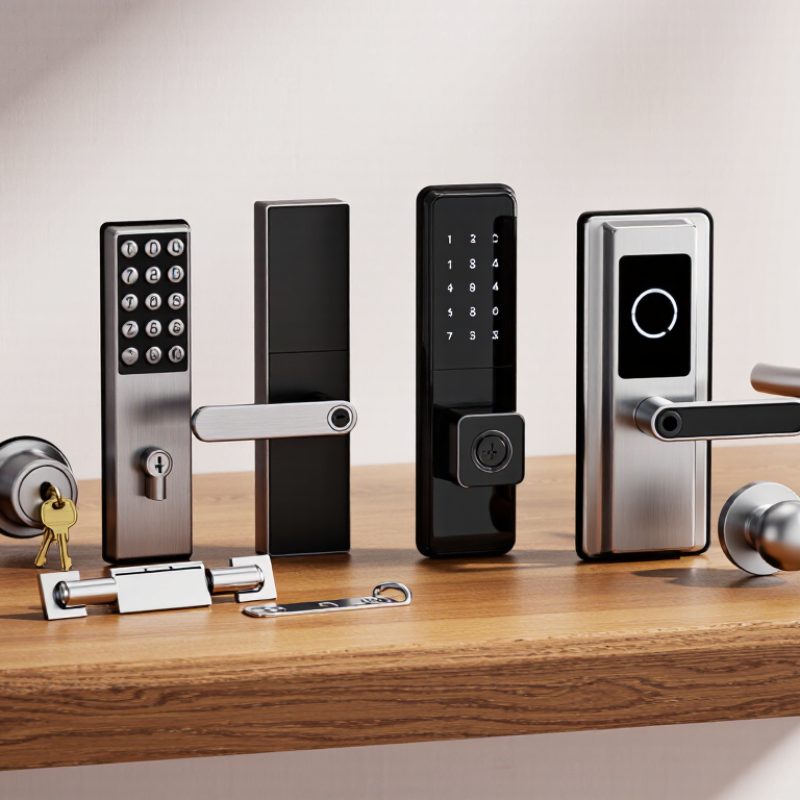
Top 10 Types of Bedroom Door Locks for Buyers?
Common bedroom door locks serve different needs, from simple privacy to stronger access control. Privacy knobs and privacy levers usually lock from inside, often with an emergency release outside. Keyed-entry knobs and levers require a key, but they may be excessive for an interior bedroom. Single-cylinder deadbolts provide stronger resistance because the bolt extends deeply into the frame. Mortise locks combine a latch and deadbolt inside one case. Cylindrical locks fit standard bored holes, while tubular locks use a compact round mechanism. Rim locks mount on the door surface and suit older doors. Passage locks do not lock, but they control unwanted closing. Electronic keypad locks remove physical keys. Smart locks add phone access and activity records.
Function matters more than appearance. ANSI/BHMA grading evaluates durability and performance through standardized tests, so buyers should check the grade rather than trust a polished finish. Grand View Research reported that the global smart lock market reached about $2.49 billion in 2023, with projected growth near 19.6% annually from 2024 to 2030. That growth reflects convenience, not automatic security. Battery failure remains possible. A physical backup method is sensible.
In practical installation, measure the backset, door thickness, and frame depth first. A deadbolt cannot compensate for a weak strike plate or loose screws. For a child’s bedroom, an interior privacy lock with emergency release may be safer than a keyed lock. For shared housing, a keypad can simplify access, though codes should change regularly. I once treated “smart” as meaning safer. That assumption needed correction. Reliable locking begins with the door frame, not the device label.
Bedroom door locks are not interchangeable. A privacy lock usually uses a push button, turn piece, or small thumbturn. It offers personal space, not strong resistance to forced entry. Common choices include privacy knobs, privacy levers, passage locks, keyed entry locks, deadbolts, keypad locks, smart locks, mortise locks, cylindrical locks, and rim locks.
In daily use, a privacy lock feels convenient. You can lock a bedroom while changing clothes, then release it from outside with a simple emergency tool. This feature matters in homes with children or older adults. However, the small latch and lightweight strike plate may provide limited protection. I once tested a loose bedroom latch and found that door alignment mattered more than the lock itself. That result was easy to overlook.
Security-focused locks use stronger bolts, reinforced strikes, and longer screws. A keyed lock or deadbolt can slow unwanted entry, while a keypad or smart lock adds access control. Yet stronger hardware can create problems. A complicated lock may delay someone during an emergency. Battery-powered models can also fail at an inconvenient time. Check the door frame, escape path, and local safety requirements before choosing one. For most bedrooms, privacy hardware suits everyday needs. A reinforced lock may fit rooms containing valuables, but it should not be selected by appearance alone. Hands-on fitting, regular inspection, and careful access planning matter more than marketing claims.
Top 10 Types of Bedroom Door Locks for Buyers?
Key Factors for Choosing a Bedroom Door Lock
Choosing a bedroom lock starts with the room’s purpose, not its appearance. Privacy knobs and levers suit most bedrooms and allow quick release from inside. Keyed locks add stronger control, but they can slow emergency access. Deadbolts improve resistance against forced entry, although they may be excessive for an interior door. Mortise locks, cylindrical locks, magnetic locks, sliding-door locks, pocket-door locks, keypad locks, and smart locks offer different balances of privacy, strength, and convenience. I have found that simple designs often create fewer problems.
Check the door thickness, backset, frame condition, and existing borehole before buying. A beautiful lock cannot correct a weak frame. Test the latch with the door slightly open. It should extend smoothly without scraping. For shared homes, a privacy lock with an emergency release may be more practical than a keyed model. Keypad and smart locks reduce key clutter, but batteries, software, and forgotten codes require attention. Technology is not always the safer choice.
Think about sound, humidity, cleaning habits, and daily traffic. A bathroom-adjacent bedroom may need corrosion-resistant hardware. A child’s room needs simple operation and no exposed sharp edges. Confirm that the lock supports safe exit and matches local building guidance. Measure twice. I once focused too much on security and overlooked the door swing. That mistake made the lock uncomfortable to use. A reliable choice should feel natural at midnight, not only impressive in a product photograph.
| Lock Type | How It Works | Privacy Level | Security Level | Typical Emergency Release | Installation Difficulty | Main Advantages | Main Limitations | Best Bedroom Use |
|---|---|---|---|---|---|---|---|---|
| Privacy Door Knob | A round knob operates a spring latch, while an interior button or thumb turn locks the door. | Moderate | Basic; intended mainly for privacy rather than forced-entry resistance. | A small outside pinhole or emergency-release slot, depending on the design. | Easy replacement when the door already has a standard bore. | Affordable, familiar, and widely available in standard door preparations. | Can be difficult to operate with wet or limited-mobility hands; not designed as a high-security lock. | Interior bedrooms where simple privacy is the main requirement. |
| Privacy Door Lever | A lever retracts the latch and a push button or thumb turn provides interior locking. | Moderate | Basic; generally comparable to a privacy knob when used with the same latch type. | An exterior pinhole, slot, or emergency-release turn. | Easy to moderate, depending on the existing door holes and latch. | Easier to operate than a knob and convenient for children or users with reduced grip strength. | The lever can be pressed accidentally by clothing or objects; it provides limited resistance to forced entry. | Family bedrooms, guest rooms, and accessible residential interiors. |
| Keyed Entry Knob or Lever | A keyed cylinder controls the latch from outside, while the inside usually has a thumb turn or button. | High | Moderate; stronger privacy than a passage lock, but the latch alone is not equivalent to a deadbolt. | A spare key or the interior thumb turn; emergency access depends on the specific configuration. | Moderate; correct backset, bore size, and door thickness must be confirmed. | Provides controlled key access and can be rekeyed or replaced without changing the entire door. | Keys can be lost, and the latch may offer less forced-entry protection than a deadbolt. | Bedrooms requiring keyed access, such as shared homes or rental properties. |
| Single-Cylinder Deadbolt | A solid bolt extends into the strike plate; it uses a key outside and a thumb turn inside. | High | High for a residential lock when correctly installed with a reinforced strike and long screws. | The interior thumb turn normally allows immediate exit without a key. | Moderate; requires accurate drilling and alignment with the strike. | Offers stronger resistance to common latch attacks than a spring-latch lock. | May be unnecessary for an interior bedroom and can delay emergency access if the key is unavailable. | Bedrooms opening directly outdoors or rooms where stronger physical security is needed. |
| Mortise Lock | A lock case fits inside a pocket cut into the door and commonly combines a latch, deadbolt, and handles. | High | High when properly fitted; the integrated case can provide a robust locking arrangement. | Usually an interior thumb turn, lever, or key depending on the configuration. | Difficult; it normally requires specialist door preparation and careful alignment. | Combines several functions in one compact case and can provide a solid, durable feel. | Higher installation cost and may not fit a door prepared for a standard cylindrical lock. | Premium residential doors, traditional interiors, and heavy-use bedrooms. |
| Cylindrical Lever Lockset | A tubular or cylindrical lock body sits inside the door, with a lever operating the spring latch. | Varies by function; privacy and keyed versions are common. | Moderate to high, depending on the latch, cylinder, strike, and tested door-hardware grade. | Privacy models often use an exterior release; keyed models require a key or interior turn. | Easy to moderate for compatible pre-bored doors. | Available in passage, privacy, and keyed functions with convenient lever operation. | Compatibility varies by door thickness, backset, bore size, and latch dimensions. | Bedrooms needing a practical lever set with a choice of locking functions. |
| Electronic Keypad Lock | A numeric code operates a motorized or electronically controlled latch or deadbolt. | High | Moderate to high; security depends on the mechanical hardware, code management, and installation. | Many models include a concealed mechanical key, external power contact, or interior manual release. | Moderate; alignment and battery access must be considered. | Removes the need to carry a key and allows codes to be changed when needed. | Requires batteries, and forgotten or shared codes can reduce security. | Guest rooms, home offices, and bedrooms needing keyless entry without a network connection. |
| Smart Connected Lock | A motorized lock is controlled by an app, wireless connection, keypad, physical key, or a combination of these. | High | Moderate to high; cybersecurity, account protection, mechanical design, and network settings all matter. | A physical key, keypad, interior thumb turn, or emergency power method may be provided. | Moderate to difficult; door alignment, batteries, and connectivity need attention. | Supports temporary access, activity records, remote control, and integration with some home systems. | Higher cost, software dependence, battery maintenance, and possible privacy or connectivity concerns. | Bedrooms in connected homes or properties that require flexible access management. |
| Pocket Door Lock | A recessed pull and hook-shaped latch allow a sliding pocket door to close and lock within the wall cavity. | Moderate | Basic to moderate; primarily designed for privacy and compatibility with sliding doors. | Usually an exterior emergency-release slot or turn. | Easy when replacing an existing pocket-door lock; difficult if the door has not been prepared. | Flush design saves space and avoids a swinging door handle. | Not suitable for standard hinged doors and generally provides less physical security than a deadbolt. | Bedrooms with pocket doors where space efficiency is important. |
| Surface Bolt or Slide Bolt | A manually operated bolt slides into a surface-mounted keeper on the door frame. | Moderate | Low to moderate; it is mainly a supplementary latch rather than a complete high-security lock. | Normally operated directly from the interior; exterior emergency access may be limited. | Easy, provided the door and frame are strong enough for the fasteners. | Simple construction, low cost, and useful as an additional privacy measure. | Can create an emergency egress concern and is not ideal as the only lock on a bedroom door. | Private rooms where a basic interior bolt is acceptable and emergency access has been considered. |
Top 10 Types of Bedroom Door Locks for Buyers?
Installation Methods and Door Compatibility Considerations
Bedroom locks include knob locks, lever locks, privacy latches, deadbolts, keypad locks, electronic locks, smart locks, mortise locks, cylindrical locks, and sliding-door latches. Each type serves a different purpose. Privacy locks suit interior bedrooms because they offer simple locking from inside. A deadbolt provides stronger resistance, but it may feel excessive for a typical bedroom. Electronic options add convenience, although batteries can fail at inconvenient times.
Check the door before choosing a lock. Measure its thickness, backset, edge bore, and existing hole diameter. A cylindrical lock usually fits a standard bored hole. A mortise lock requires a deep pocket cut into the door edge. Surface-mounted latches avoid major cutting and can help with unusual doors. Measure twice. Fit matters.
Installation should match the door material and frame strength. Solid wood doors usually accept screws securely, while hollow-core doors may need reinforcement. Glass, sliding, and unusually narrow doors often require specialized latch designs. In my installation experience, replacement is easier when the new lock matches the old hole pattern. Still, that assumption can fail. A slightly different backset may leave the latch misaligned. Test the lock with the door open, then closed, and check smooth operation. Avoid forcing the handle, because pressure can hide poor alignment. Local building, fire-safety, and accessibility requirements may also affect the suitable installation method.
Bedroom doors need more than a lock that simply turns. Buyers can compare knob locks, lever locks, deadbolts, mortise locks, rim locks, euro-cylinder locks, keypad locks, smart locks, privacy locks, and hotel-style card locks. The right choice depends on who needs access and how often. A privacy lock suits an internal bedroom, but it usually offers limited resistance to forced entry. A deadbolt or mortise lock provides stronger protection, although installation errors can weaken both.
Maintenance is easy to underestimate. Dust can make a cylinder feel rough, while loose strike screws can reduce latch engagement. Check the hinges, strike plate, emergency-release feature, and battery compartment every few months. Use the lubricant specified for the lock; unsuitable oil may collect grit. The 2023 FBI Crime Data Explorer recorded more than 800,000 burglary offenses in the United States, showing why basic physical security still matters. Yet stronger hardware cannot compensate for a poorly fitted frame.
Access features deserve careful testing. Keypad locks avoid hidden spare keys, while smart locks can offer temporary codes and activity records. However, batteries fail, connectivity drops, and software settings can confuse older users. The National Fire Protection Association reports that residential fires remain a major safety concern, so bedroom locks should allow quick exit without a key. ANSI/BHMA standards help buyers compare durability and operational performance, but certification is not a substitute for checking the actual door. A lock may look advanced and still be inconvenient at midnight.
Scores use a typical 1–5 comparison scale: higher maintenance scores indicate easier upkeep, while higher safety and access scores indicate stronger resistance to unauthorized entry and greater everyday convenience. Actual performance depends on installation quality, door construction, cylinder design, power backup, and user settings.
© 2025 Fiberama All Rights Reserved.
