China Top CDX Pine Plywood Supplier for Global Buyers?

For global buyers, choosing a China CDX pine plywood supplier requires more than comparing container prices. More than price. A reliable partner should explain veneer grades, core construction, glue performance, thickness tolerance, and packaging. This introduction examines how experienced exporters present Cdx Pine Plyood for construction, roofing, wall sheathing, and general industrial use. It also considers factory capability, inspection routines, and communication after purchase.

Practical sourcing begins with clear specifications. Buyers should confirm panel dimensions, face and back grades, formaldehyde class, moisture resistance, and applicable test reports. A professional supplier can provide production samples, mill photographs, loading records, and third-party inspection options. Details matter. A strapped bundle with dry corners and readable labels reduces confusion at the destination. During factory evaluation, buyers may review veneer peeling, hot-press control, sanding quality, and edge sealing. These checks cannot replace independent testing, but they reveal how consistently the plant works. Experience also shows that a low quotation may exclude fumigation, inland delivery, or stronger export packaging.

China has a broad plywood manufacturing base, yet capacity alone does not prove reliability. Supplier history, stable raw-material access, transparent claims handling, and realistic lead times deserve equal attention. Some listings use “CDX” loosely, which can create costly misunderstandings. Written confirmation is essential. No factory is perfect. Even a capable supplier may face seasonal log variation, port delays, or shade differences between batches. Honest communication and documented corrective action often matter more than polished sales language. This guide helps global buyers assess Cdx Pine Plyood with practical questions, measurable evidence, and a balanced view of value, quality, and risk.

China Top CDX Pine Plywood Supplier for Global Buyers?

Definition and Uses of CDX Pine Plywood in Global Construction

CDX Pine Plywood: Definition and Uses in Global Construction

CDX pine plywood is made by bonding thin pine veneers with their grain directions crossed. “C” and “D” describe the face and back veneer grades; “X” commonly indicates an Exposure 1 bond classification. It is designed to tolerate limited construction-site moisture, not prolonged weather exposure. Not waterproof. The USDA Forest Products Laboratory’s Wood Handbook explains how cross-laminated veneers help plywood resist dimensional movement compared with solid wood.

Builders commonly use CDX panels for roof, wall, and subfloor sheathing, where the surface will be covered by roofing, siding, or finish flooring. Its rougher face makes it less suitable for visible interiors. The Food and Agriculture Organization’s 2022 forest-products statistics record global plywood production at roughly 180 million cubic metres, reflecting plywood’s broad role in construction and other applications. That figure covers plywood generally, not CDX alone.

For a practical check, look for the panel grade, thickness, and span rating printed on the sheet. A 12-millimetre panel may suit some applications, but support spacing and local building specifications matter. Check the stamp. CDX can swell or delaminate if left exposed too long, so cover installed panels promptly and confirm the required exposure rating for the project.

Core Specifications and Quality Standards for CDX Pine Plywood

For global buyers, CDX pine plywood should be judged by measurable specifications, not attractive photos. CDX usually describes exterior-grade sheathing with one C face and one D face. It uses weather-resistant adhesive for temporary outdoor exposure. However, grading terms can vary by market. Confirm the declared standard before ordering. Pine veneers should be evenly layered, tightly pressed, and free from open gaps. Check thickness, length, width, squareness, and edge quality. A 12 mm panel should be measured at several points with a calibrated gauge. Good plywood is rarely perfect. Small surface repairs may be acceptable, but delamination is not.

Tips: Request the technical data sheet, production-batch test report, and moisture readings. Ask whether the panels follow PS 1, EN 636, or another recognized standard. Verify bond durability, density, formaldehyde emissions, and face-grade requirements. Do not accept vague claims such as “premium quality” without test evidence. Packaging also matters. Sealed bundles, corner protection, and clear labels reduce damage during long transport.

Quality control should include both factory inspection and pre-shipment sampling. Inspect panel edges for lifted veneers, measure thickness variation, and check the surface under strong side lighting. A basic water-exposure test may reveal weak bonding, but it cannot replace certified laboratory testing. I have seen visually clean sheets fail at the edges. That detail is easy to miss. Buyers should also compare the approved sample with the delivered batch, because color and grain can change slightly between production runs.

How China Manufactures and Controls CDX Pine Plywood Quality

China Top CDX Pine Plywood Supplier for Global Buyers?

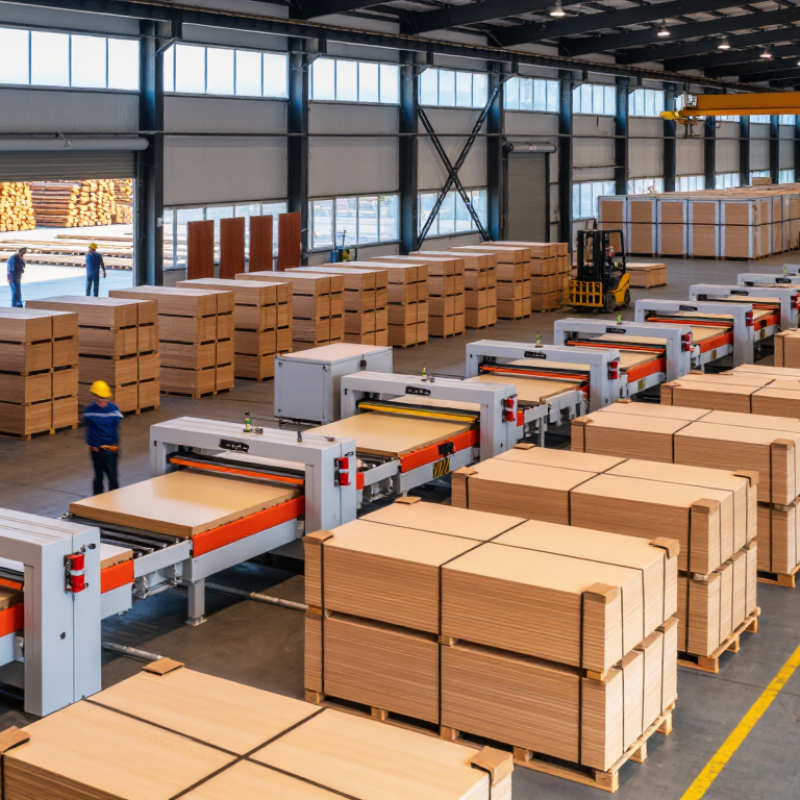
China manufactures CDX pine plywood through controlled veneer selection, drying, gluing, pressing, and grading. Pine logs are peeled into veneers, then sorted by knots, splits, and thickness. Core veneers are cross-laid to improve strength and reduce warping. Factories monitor hot-press temperature, pressure, and time for stable bonding.

Quality control cannot rely on appearance alone. The USDA Forest Products Laboratory Wood Handbook explains that moisture changes affect wood movement and dimensional stability. Therefore, reliable mills check moisture before pressing and after conditioning. The FAO Global Forest Resources Assessment 2020 reports 4.06 billion hectares of global forest area, making responsible wood sourcing a major supply-chain issue. Buyers should request traceable origin records and recent test reports. CDX is mainly a North American grading term, so Chinese suppliers should match production with the buyer’s required panel standard. A perfect face can still hide weak core joints.

Tips: Check panel thickness, moisture content, glue-bond performance, and edge sealing. Ask for batch photos and independent test results. Small samples matter. Reject panels with open gaps, swollen edges, or uneven sanding. Quality can vary between batches, even within one factory.

China Top CDX Pine Plywood Supplier for Global Buyers? - How China Manufactures and Controls CDX Pine Plywood Quality
Quality Dimension Typical CDX Pine Plywood Data Manufacturing or Quality-Control Practice Importance for Global Buyers
Product Construction and Classification
Panel composition Multi-layer pine veneer construction with an odd number of plies, commonly 3, 5, 7, or more layers depending on thickness. Veneers are arranged with adjacent grain directions generally perpendicular to improve dimensional stability and load distribution. Cross-lamination helps reduce splitting, cupping, and movement compared with solid wood boards.
CDX designation C generally refers to the face veneer grade, D to the back veneer grade, and X to the use of exterior-type adhesive. Face and back grades should be confirmed against the purchase specification because grading rules and allowed repairs may vary by applicable standard. Buyers should not rely on the abbreviation alone; the face quality, core quality, repairs, and permitted defects should be written into the contract.
Common thicknesses Approximately 9, 12, 15, 18, and 21 mm are commonly traded sizes; other thicknesses can be produced to order. Panels are calibrated and measured at multiple points using a thickness gauge. Tolerances should follow the agreed standard or purchase specification. Accurate thickness supports predictable fastening, joint alignment, structural performance, and container loading calculations.
Common panel sizes 1,220 × 2,440 mm is widely used internationally. Other formats, such as 1,220 × 2,500 mm, may be available by order. Length, width, squareness, and edge straightness are checked before packing. Panel size should match local construction modules and shipping requirements to reduce cutting waste.
Material and Manufacturing Controls
Veneer moisture content A practical production and shipment target is often about 6%–14%, subject to the destination climate and agreed specification. Moisture meters are used after drying and before pressing. Veneers outside the control range are reconditioned or rejected. Balanced moisture reduces blistering, delamination, warping, and dimensional changes after installation.
Adhesive system Exterior-grade phenolic or other approved weather-resistant resin systems are commonly used for CDX-type panels. Resin mixing ratio, spread rate, open assembly time, pressing temperature, pressure, and time are recorded and controlled. The adhesive system determines resistance to moisture exposure and should be verified through the required bond or delamination test.
Hot-pressing process Pressing conditions are adjusted according to wood species, veneer moisture, panel thickness, adhesive formulation, and number of plies. Production records should include press temperature, pressure, time, and loading sequence for traceability. Consistent pressing reduces core gaps, weak bonds, thickness variation, and uneven panel density.
Core veneer quality Core veneers should be properly aligned and free from excessive open joints, large holes, severe overlaps, or loose sections. Core lay-up is visually inspected before pressing; panel edges and random cut sections may be checked during quality audits. Core defects can reduce screw-holding capacity, bending strength, water resistance, and service life.
Performance and Compliance Verification
Bond durability Exterior-use panels should demonstrate resistance to moisture-related bond failure under the applicable purchaser or product standard. Representative samples may undergo water-soak, boil, cyclic exposure, or delamination testing, depending on the specified standard. Bond testing is more meaningful than a visual surface inspection when panels will be used in humid or intermittently wet conditions.
Mechanical performance Strength and stiffness vary with thickness, lay-up, veneer quality, wood density, and manufacturing controls. Testing may include modulus of rupture, modulus of elasticity, shear strength, nail or screw withdrawal, and dimensional stability. Buyers should request declared performance values rather than comparing panels only by nominal thickness or appearance.
Formaldehyde emissions Low-emission classifications such as E1 may be specified when required by the destination market or project documentation. Emissions are verified using a recognized laboratory method, such as chamber testing, gas analysis, or an approved equivalent method. Emission requirements differ by country and application; the exact class and test method should be stated before production.
Dimensional inspection Key checks include thickness, length, width, squareness, edge straightness, surface flatness, and panel weight. Inspection is performed with calibrated rulers, calipers, moisture meters, straightedges, and weighing equipment. Documented dimensional control improves installation accuracy and reduces disputes over quantity and conformity.
Surface condition Typical CDX panels may contain natural veneer features, repaired knots, color variation, and limited patches consistent with the agreed grade. Visual inspection checks for excessive open defects, sanding-through, contamination, press marks, delamination, and unacceptable face repairs. Appearance expectations should be agreed separately from structural requirements, especially for panels used in visible or semi-visible applications.
Export Readiness and Buyer Documentation
Packaging and protection Panels are commonly stacked on pallets or runners, protected with moisture-resistant wrapping, and secured with bands. Packaging inspections verify stack stability, corner protection, label accuracy, and protection against rain during handling. Suitable packaging reduces edge damage, contamination, and moisture uptake during inland transport and ocean shipping.
Container loading Loading quantity depends on panel thickness, dimensions, packing method, container type, and maximum permitted cargo weight. Load plans should account for pallet weight, axle or floor loading, moisture protection, ventilation, and safe cargo securing. A pre-approved loading plan helps prevent overloading, shifting, crushing, and unexpected freight-cost changes.
Traceability Each production batch should be identifiable by date, panel specification, quantity, and inspection status. Batch records can link raw materials, adhesive lot, production line, test results, packing list, and shipment reference. Traceability supports corrective action, third-party inspection, and reliable handling of quality claims.
Recommended buyer documents Product specification, inspection report, moisture records, test report, packing list, commercial invoice, and shipping documents. Documents should state panel size, thickness, face/back grade, adhesive type, applicable standard, quantity, and inspection criteria. Clear documentation reduces ambiguity and allows customs, engineers, distributors, and end users to verify conformity.
Buyer note: The figures and descriptions above represent common commercial practices and typical specification ranges, not a universal standard for every CDX pine plywood shipment. Final acceptance criteria should be agreed in writing with the applicable national, regional, or project standard before production.

Criteria for Selecting a Reliable Chinese CDX Plywood Supplier

China Top CDX Pine Plywood Supplier for Global Buyers?

Criteria for Selecting a Reliable Chinese CDX Plywood Supplier

A dependable Chinese CDX plywood supplier should provide more than a low quotation. Check the factory’s production experience, equipment, and quality-control process. Ask for recent mill certificates and product specifications. These should state thickness, dimensions, core structure, bonding grade, and moisture range. Clear documents show technical competence.

Request physical samples before placing a large order. Inspect the pine face veneer for open knots, patches, sanding marks, and uneven color. Check the edges for core gaps and delamination. Measure thickness at several points, not just the center. A useful moisture range is often around 8% to 14%, but the buyer’s climate and application still matter. Small details matter.

A reliable supplier should explain how each batch is traced. Ask for production photos, packing details, inspection records, and loading procedures. Strong packaging includes corner protection, dry wrapping, and stable pallet stacking. Confirm lead times in writing, including holidays and port handling. Communication also matters. Slow replies before an order may become serious delays later.

Do not rely on polished factory videos alone. A sample can still mislead. Consider an independent pre-shipment inspection for larger purchases. Review how the supplier handles rejected panels, replacement requests, and specification changes. Some buyers focus too heavily on price and regret it after installation. A better decision balances consistency, evidence, service, and total delivered cost.

Export, Pricing, Shipping, and Buyer Verification Considerations

China Top CDX Pine Plywood Supplier for Global Buyers?

Export purchasing requires more than finding the lowest CDX pine plywood price. Ask for recent production photos, mill details, panel dimensions, core structure, and test documents. Verify whether the stated grade matches your destination market’s requirements. Standards can differ between countries. Do not rely on a polished PDF alone.

Pricing should be compared item by item. Check thickness tolerance, face veneer quality, glue classification, packaging, and loading quantity. A low quote may exclude fumigation, inland transport, port charges, or inspection fees. Request a written quotation with Incoterms and payment stages. Keep communication clear. Small omissions become expensive.

Shipping plans need realistic timing. Confirm container loading photos, pallet protection, moisture control, and document accuracy before departure. Buyer verification also matters. Review the supplier’s registration, export history, factory address, and bank account consistency. A third-party factory inspection can expose weak machinery or poor storage conditions. It costs money, but so does replacing warped panels. Some checks may still be incomplete. That is the uncomfortable part. Use a trial order, independent inspection, and measurable acceptance criteria before scaling purchases.

Contact us

Let's Get Started!

Competitive Pricing and Exceptional Service!